Categories
Benedictine Spirituality Christ Divine Office Lectio Divina Liturgy Scripture Trinity

The power of hope

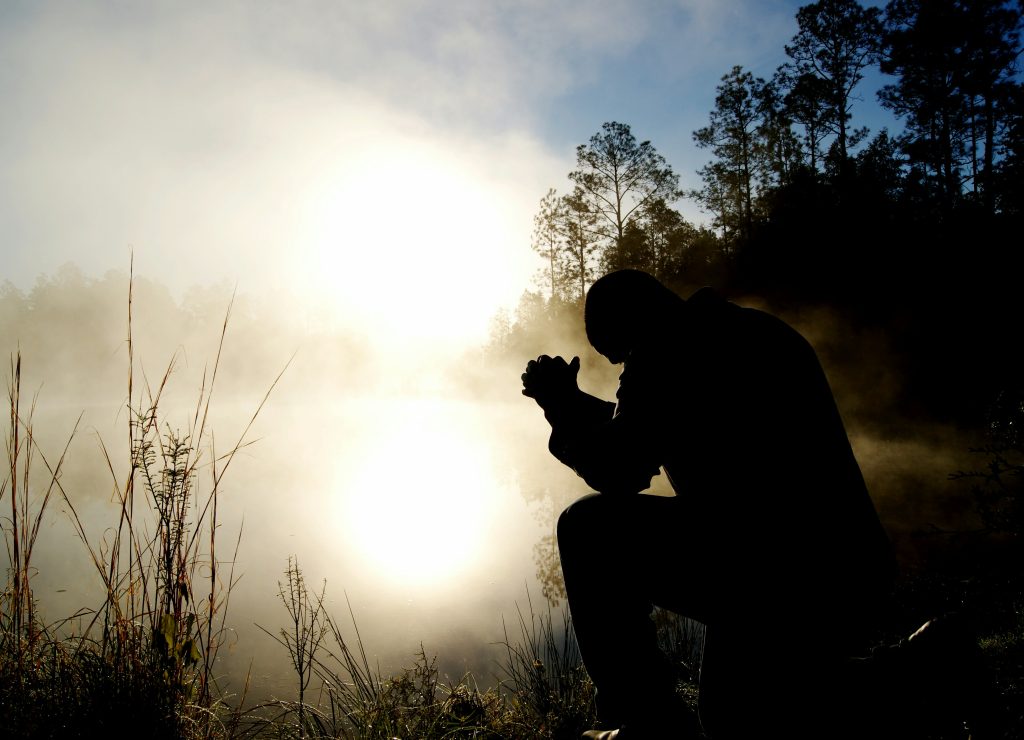
Image by Vinod Pattar from Pixabay

As we begin our celebration of Trinity Sunday I’m drawn to this from St Paul’s letter to the Romans:

“Our sufferings bring patience, as we know, and patience brings perseverance, and perseverance brings hope, and this hope is not deceptive, because the love of God has been poured into our hearts by the Holy Spirit which has been given to us.”

I’m touched by his realism as he openly acknowledges that suffering is part of life. He makes no attempt to run away from it, to disguise or numb it as we are so often tempted to do.

He doesn’t expect, or even seem to want, a trouble-free life. Instead, in accepting the inevitability of suffering he discovers the transforming power of hope.

Like St Paul, we all know suffering is part of life, and hope is often its first victim. When life gets challenging or painful we tend to fall into a hopelessness that tells us that all is lost. The voice of hopelessness can be both persuasive and beguiling, it’s one we are all too willing to listen to.

St Paul, writing from his own experience of suffering, to others who were also suffering, draws us away from that voice of hopelessness. He tells us that, however painful or challenging our lives, the hope Christ offers us can never be undermined or destroyed.

It’s not a hope based on empty promises or dreams that deceive or mislead. Instead, it’s a hope firmly grounded in the love of God which has existed since the beginning and which will always hold us in being.

This Trinity Sunday how is the hope the Spirit brings transforming your daily life?

Categories
Benedictine Spirituality Christ Divine Office Gospel Lectio Divina Liturgy Saints Scripture

Empty hands and trusting hearts

Photo by Javier Diaz De Leon on unsplash.com

Today we’re celebrating the feast of St Augustine of Canterbury who, somewhat reluctantly, was sent by St Gregory the Great to bring the Gospel to the English. I’ve been reflecting on this from today’s gospel:

“I am sending you out like lambs among wolves. Carry no purse, no haversack, no sandals.”

It makes me realise just how vulnerable we become when we respond to Christ’s call to follow him. I imagine that St Augustine felt the full weight of that vulnerability when he accepted the task Gregory set him.

Travelling to a foreign land, which in itself was risky, dealing with unknown customs and practices and uncertain of his reception I wonder if he felt a bit like those lambs surrounded by wolves that Jesus talks about.

Following Christ means that we, like St Augustine, are called to step out into the unknown. We too live in increasingly challenging, dangerous and uncertain times. Hardships such as war, hunger, homelessness and climate change are now affecting daily life for many people.

So we have to face our vulnerability again in a new way, accepting that much of what happens in our lives is beyond our control. It can very easily leave us feeling like “lambs among wolves”.

We can find props to help us avoid that vulnerability, but that is not the call of Christ. Instead, Christ calls us to leave behind those props that would distract us and to follow him once more into unknown territory with “no purse, no haversack, no sandals.”

Where is Christ calling you out into the unknown today?

Categories
Benedictine Spirituality Christ Discernment Eastertide Gospel Lectio Divina Liturgy Pentecost Resurrection Scripture

Attentive to Christ’s Call

Photo by Felipe Correia on unsplash.com

ATTENTIVENESS

Today’s Eastertide word is ATTENTIVENESS. Today’s gospel covers the very end of Jesus’ conversation with Peter. Once again I find myself touched by Peter’s bluntness.

Even in the middle of his intense and intimate conversation with Jesus Peter is distracted enough to wonder about the fate of the beloved disciple. He asks Jesus:

“What about him, Lord?”

I too can be easily distracted even in my most prayerful moments. So Peter’s distraction and his honesty about it are consoling. They make me realise how commonplace distraction in prayer is.

His honesty in speaking to Jesus about it are a reminder that we can be open with Jesus when we too are distracted. Jesus’ response brings Peter back, firmly and lovingly from his distraction. He draws him back to the focus of their conversation, saying to him:

“If I want him to stay behind till I come, what does it matter to you? You are to follow me.”

Sometimes allowing distractions to flourish in our minds and hearts can blunt the urgency or challenge of Jesus’ call. If we feel challenged, we can shift some of our discomfort by focussing on other things or other people.

This last part of Jesus’ conversation with Peter calls us to reflect on that. It calls us to notice our distractions and to bring them to Jesus. Then he can help us to lay them aside so that we, like Peter can give ourselves wholly to our encounter with him.

As we move towards Pentecost where is Christ challenging you to give your full attention to following him?

Categories
Ascension Benedictine Spirituality Christ Eastertide Gospel Lectio Divina Liturgy Resurrection Scripture

Held in the prayer of Christ

Photo by Aaron Burden on unsplash.com

PRAYER

Today’s Eastertide word is PRAYER. We know we are called to nurture and sustain a relationship with God through PRAYER. Our prayer might be a prayer of praise, or petition or lament.

It might be a combination of all three. It might be personal prayer that we enter into by ourselves or communal prayer that we share with others through the liturgy. Mostly we need a combination of both of these.

We put a lot of effort into our prayer. We put a lot of thought into the best and most effective way to pray. Today’s gospel presents an image that I don’t think we often think about. It shows us Jesus praying for us. It seems to me that this tells us something important about Jesus’ relationship with the Father and about his relationship to us.

We know from elsewhere in the gospel that time spent with his Father was important to Jesus. Today’s gospel prayer, focused on what he knows we will need when he has returned to the Father, tells us that he deeply cares for us and is concerned for our well-being.

He wants to ensure that we are drawn into his union of love with the Father. He prays that we may receive the gift of eternal life which he describes as knowing God and knowing Christ:

“Let him give eternal life to all those you have entrusted to him. And eternal life is this: to know you, the only true God, and Jesus Christ whom you have sent.”

His prayer is that we come to recognise God in the very depths of our hearts in ways that are life affirming and transforming.

How do you want to respond to the Christ who prays for you this Eastertide?

Categories
Ascension Benedictine Spirituality Christ Divine Office Eastertide Gospel Lectio Divina Liturgy Pentecost Resurrection Scripture

The Glory of Christ

Photo by Natalya Letunova on Unsplash
 

GLORIFY

Today’s Eastertide word is GLORIFY. Beginning with Jesus’ prayer for his disciples the word “glorify” repeats again and again throughout this Sunday’s gospel:

“Jesus said: ‘Father, the hour has come: glorify your Son so that your son may glorify you; and, through the power over all humankind that you have given him, let him give eternal life to all those you have entrusted to him.’”

In an age that sees itself as egalitarian his words seem baffling or even downright uncomfortable. We’ve seen too many misinterpretations of glorification to be comfortable with it. But John’s Gospel is not speaking of the human glory that we’ve seen misused and abused in so many areas.

The glory of the gospel is discovering the reality of divine presence in the midst of ordinary life. We’ve seen that unfold in Jesus’ in miracles and life transforming encounters.

Now Jesus is preparing his disciples for his departure and the coming of the Spirit. His prayer for them is that the presence of God will continue to break through into their lives.

That presence won’t remove the challenges, difficulties and dangers they face. Instead the presence of God with them will transform them, giving them courage to move forward in hope and trust.

In our own challenging and uncertain times that presence still has the power to break through and transform our lives. It is unlikely (though not impossible) that we will see it in grand gestures and actions.

It’s more likely to be apparent in glimpses and glimmers in the midst of the most ordinary and mundane activities of life. If we are attentive and alert it will come to us in the most unlikely of circumstances.

Where is God calling you to be attentive to the presence of God’s glory in your life?

Categories
Ascension Benedictine Spirituality Christ Discernment Divine Office Eastertide Gospel Lectio Divina Liturgy Resurrection Scripture

Ascension

Photo by Elaine Alex on Unsplash

ASCENSION

Ascension is one of the feasts I find most difficult for a variety of reasons. It’s very easy to see it as otherworldly, focussed more on eternity than on the nitty-gritty of human life. It also has an element of letting go.

Once again, we see Jesus leaving the disciples to face an unknown and uncertain future. This compels us to recognise the reality of our own uncertain and unknown future.

In my struggles to ground the feast in the reality of daily life I looked at the Scripture readings. I found two things that helped me. The first was from Matthew’s Gospel. He tells us that when the disciples saw Jesus:

“They fell down before him, though some hesitated.”

So it seems like some of those first disciples were also ambivalent about what was going on. I find consolation in that, and in Jesus’ response to it. He doesn’t criticise them or turn them away. Instead he sends them out with their ambivalence and uncertainty to spread the Good News of salvation.

The second helpful thing was in last night’s vigil reading from St Paul’s letter to the Ephesians:

“Be humble, gentle and patient always. Show your love by being helpful to one another. Do your best to preserve the unity which the Spirit gives, by the peace that binds you together.”

His words call us to strive to live up to the standard God sets not in terms of a future heavenly kingdom, but in very practical ways that we can all practice.

If we can find ways of being kind and helpful to those around us we will be able to make the Good News of the kingdom a reality in our lives and the lives of those we encounter.

Where is Christ calling you to live up to his standards in your daily life?

Categories
Benedictine Spirituality Christ Eastertide Gospel Lectio Divina Liturgy Prophetic voices Resurrection Scripture Uncategorized

Out of the shadows.

Photo by D. Jameson RAGE on unsplash.com

SHADOW

Today’s Eastertide word is: SHADOW. It doesn’t comfortably sit with Eastertide, the season of light and new life. Yet, there are plenty of shadowy moments in the Easter gospel, the Acts of the Apostles and our own Eastertide experiences. The light of the risen Christ can make as even more aware of our shadows.

Today is the feast of St Joseph the worker. In many ways it’s hard to imagine a more shadowy figure. He is always in the background, supporting Mary and the child Jesus, bringing stability and respectability to difficult situation.

Yet, if we look beyond that image we find a different story. I’m reflecting on these words from a hymn for his feast:

“His love was humble, flame of God’s own fire,
A light to guide the path he trod alone;
Like Abraham, like Moses he believed,
And went in faith to find a land unknown.”


They speak of a man of great faith who is not afraid of the shadows. He allows them to guide him into God’s light following in the footsteps of his ancestors, leaving everything to follow God into the unknown. It can’t have been an easy choice, it will have required both humility and courage.

It’s impossible to think of this without reflecting on the ever-darkening shadows that overwhelm our world today. In such shadowy times St Joseph can be a valuable role model for us.

In this challenging Eastertide St Joseph reminds us that however dark shadows seem the risen will be with us, leading us into new life by the light of his love.

What are the shadows that you need the risen Christ to dispel in your life this Eastertide?

Categories
Benedictine Spirituality Christ Divine Office Eastertide Gospel Lectio Divina Liturgy Monastic Life

In the fire of Easter Love.

Photo by biemme zeta on unsplash.com

LOVE

LOVE is at the heart of the gospel and the source of our Eastertide joy. I’m reflecting on it today as we celebrate the feast of St Catherine of Siena, Doctor of the Church.

A third order Dominican she was called to make the love of Christ reality in her life and for her challenging and dangerous times.

This led her to a public role in the life of the church, speaking out against schism, promoting unity and advocating for clerical reform. These words from her dialogue on Divine Revelation touched me:

“By your light you enlighten our minds… In this light I know you and I picture you to myself as the supreme good, the good beyond all good… Beauty beyond all beauty, wisdom beyond all wisdom. You are the food of angels, who gave yourself to us in the fire of your love.”

She speaks to me especially powerfully in these times when our world seems so consumed by war and suffering. In such times it can be hard to see and witness to the love of the risen Christ in our lives.

It’s easy to get discouraged, to feel swamped by sufferings we can’t alleviate and situations we can’t fix. It becomes too risky to reach out to others in love so we withdraw into ourselves becoming protectionist and isolationist.

St Catherine’s example suggests an alternative. She calls us to seek to become so connected to the risen Christ we are consumed by the fire of God’s love. Then, following his example we can reach out and share that love with all those we encounter in our challenged and war-torn world.

How does the fire of God’s love enable you to love those you encounter this Eastertide?

Categories
Benedictine Spirituality Christ Cross Eastertide Gospel Lectio Divina Liturgy Resurrection Scripture

The feast of St George

Image by Andrea Don from pixabay.com

UNITY

UNITY is central to the message of Eastertide. The resurrection gospel show as the disciples drawing into a new community that supports and protects one another. This means they have to learn to let their barriers down, and risk to others.

Our challenging times incline us to build barriers that we can hide behind. They draw towards protectionism, keeping ourselves safe at the expenses of others. The example of St George, whose face we celebrate today, shows us this is not the call of the risen Christ.

As a Syrian in the Roman army who is patron saint of at least England, Russia, Ethiopia and Georgia St George offers us the opportunity to expand our horizons. He reminds us that our common humanity extends beyond borders and nationalities. He shows us that our hope lies in breaking down barriers, reaching out to the stranger, not in building them higher and excluding people.

He had the courage to stand up to the evil of his day, slaying the “dragons” of his times wherever he could. This offers us courage and hope. In our own times we face plenty of “dragons” unleashed the wars, migration, economic, social and political challenges.

It’s not call without risks. In his second letter to Timothy St Paul writes:

“Indeed, all who desire to live a godly life in Christ Jesus will be persecuted.”

As we celebrate the feast of St George it seems to me that we are called risk persecution to reach out others, seeking unity and reconciliation wherever we can.

Where is the risen Christ calling you to risk seeking unity today?

Categories
Benedictine Spirituality Discernment Eastertide Gospel Lectio Divina Liturgy Resurrection Scripture

With Fears Calmed

Photo by Giulia Veneziano on unsplash.com

FEAR

FEAR is another word we don’t often connect with Eastertide. Yet there is a plenty of fear in the resurrection gospels as the disciples try to process all that has gone on. Today’s gospel reflects the disruption of that time. Our own stormy times make it easier to identify with the disciples response to the unexpected storm that threatens them.

I imagine them longing for rest and the opportunity to process some of the strange events they’ve witnessed over the previous days. As darkness falls and they climb into the boat they must have been hoping for a quiet, peaceful crossing to Capernaum.

It wasn’t to be, as they get further from the shore the wind and the waves get stronger and a storm blows up. They find themselves buffeted on all sides as wave after wave threatens to overwhelm their small boat.

Struggling to control the boat they see Jesus walking towards them across the water. Initially his appearance seems to do little to help their situation. The strange sight of him walking towards them over the stormy lake only increases their already mounting fear. Then Jesus speaks to them, and everything changes:

“It is I, do not be afraid.”

His words offer them consolation and calms their fears and they reach the shore safely. As we face our own stormy times we too need to hear Christ’s voice calming our fears and assuring us that, with his grace we will come through our storms.

Where do you need to hear the risen Christ calming your fears this Eastertide?