Categories
Benedictine Spirituality Christ Gospel Lectio Divina Scripture

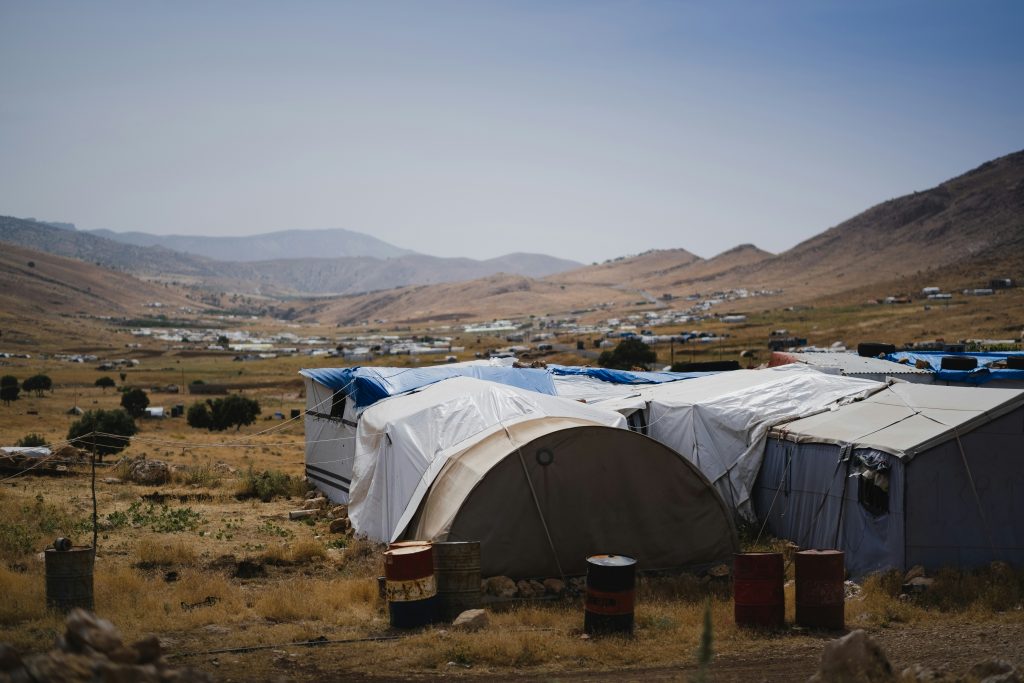
Visions of hope and promise.

Photo by Raimond Klavins on unsplash.com

Today’s readings are a reminder that our ways are not God’s way. We can comfortably admit in conversation or prayer while protecting ourselves from just how disturbing and unsettling it can be. St Paul reminds the Corinthians of this, saying:

“We teach what Scripture calls: the things that no eye has seen and no ear has heard, things beyond the human mind, all that God has prepared for those who love God.”

His image is full of hope and promise, it can give us courage in dark times. It can also disturb and unsettle us. It calls us to allow ourselves to be led by the Spirit in unexpected ways. We have to be prepared to go into places and situations that surprise or even disconcert us. It’s a call to risk stepping into the unknown.

In the Gospel Jesus uses the commandments to deepen their understanding of what it means to be the people of God. The one that struck me most is the last one. He says to his disciples:

“All you need say is “Yes” if you mean yes, “No” if you mean no; anything more than this comes from the evil one.”

It’s such an obvious and straightforward statement. Yet in our times when promises are easily made and just as easily discarded they carry a powerful message. It’s tempting to overpromise when we see people suffer, and it’s tempting to believe those promises.

Jesus calls us away from the hype and the drama of all that. In return he offers us a greater vision, calling us to open our hearts to the presence of his kingdom in places where we might least expect it.

Where is Christ calling you to embrace the vision of the kingdom with a willing heart and ready spirit today?

Categories
Benedictine Spirituality Christ Discernment Gospel Lectio Divina Liturgy Prophetic voices Scripture

Shedding light

Photo by Jamie Street on unsplash.com

Living in challenging and frightening times it’s easy to feel overwhelmed. So much in our societies seem broken that fixing them seems beyond us. This can lead us into despair and hopelessness. We can be tempted to give, feeling that there’s nothing we can do to fix things.

Today’s gospel calls us to take a different view. Jesus reminds us that we have already received his light. This offers real consolation in these dark times. However, Jesus doesn’t only console us he challenges us saying:

“No one lights a lamp to put it under a tub; they put it on the lamp-stand where it shines for everyone in the house. In the same way your light must shine in the sight of all people, so that, seeing your good works, they may give the praise to your Father in heaven.”

His challenge is clear, his light is not just a consoling individual gift, it is a gift we are called to use and share. It’s not something to keep safe and hidden, but something we are to hold aloft to help push back the darkness that threatens to engulf our world.

Those are fine words, but it can be hard to know how to put them into practice. In the first reading Isaiah gives us some very clear and direct guidance about that, saying:

“If you do away with the yoke, the clenched fist, the wicked word, if you give your bread to the hungry, and relief to the oppressed, your light will rise in the darkness, and your shadows become like noon.”

His words give make it very clear, we bring Christ’s light to the world by the way we treat others. We do it by showing kindness and compassion, by helping and supporting where we can. It’s a call to look out for those little acts and encounters that can brighten people’s days and lighten their burdens as they lived through challenging times.

Where is Christ inviting you to become the light of the world today?

Categories
Benedictine Spirituality Christ Discernment Gospel Lectio Divina Scripture

Who is this?

Photo by Ana Municio on unsplash.com

In today’s gospel Jesus returns to his hometown after a time of travelling, preaching the gospel and healing. We might expect that they welcome him with open arms. We might hope that the people who knew him best, who watched him grow up which trust him and believe in him. Instead, they were puzzled, unsettled and confused. They said to one another:

“What is this wisdom that has been granted him, and these miracles that are worked through him? This is the carpenter, surely, the son of Mary, the brother of James and Joset and Jude and Simon?”

I can understand their response. It’s disconcerting at best when somebody we know starts to behave in a different way. We can feel uncomfortable and even judged if they start to question our familiar ways of being, ways that we thought they accepted as we do.

It’s an experience many of us will of us will have had in our own lives. Such situations can be painful and undermining. The gospel shows how fully human Jesus was. It seems to me that he, like us, was hurt and was thrown by their response, so much so that:

“He could work no miracle there…”

Such situations can lead us to blame one another, and that increases the hurt, and can lead to disagreement and bitterness. Jesus does none of these things. He sees the situation, acknowledges his own pain, but does not blame the townspeople.

He holds a mirror up to us, inviting and challenging us to look at our own behaviour and to put aside that temptation to blame, leaving the door open for reconciliation.

Where is Christ challenging you to put aside the temptation to blame today?

Categories
Benedictine Spirituality Candlemas Christ Christmastide Divine Office Gospel Lectio Divina Liturgy Monastic Life Prayer Presentation Saints Scripture

Light in darkness

Photo by Zach Lucero on Unsplash

Today were celebrating the feast of the Presentation. It strikes me as a feast that looks both backwards and forwards. Its liturgy resonates very much with the Christmas liturgy, as we revisit Christmas hymns and antiphons. Yet, it also compels us to look forward to the new beginning heralded by the coming of the Messiah.

Like Simeon and Anna, we are called to draw hope from our heritage and move forward into the unknown bearing the light of Christ for our world and our times. The second reading at the vigil is from St Sophronius. I’m reflecting on these words:

“Let us all go together bright with the light to welcome with old Simeon that everlasting shining light. Rejoicing with him in our souls, let us sing a hymn to the Begetter and Father of the light, who has sent the true light and driven away the darkness and made us all shine with that light.

It’s not the first time I’ve reflected on them, and each time I revisit them they remind me that, in these last dark, cold days of winter we are called to be bearers of the light of Christ to each other and to the world. This year I’m very aware of the many darknesses that the world faces. It can feel overwhelming and we can easily feel hopeless.

Yet the opposite is true. In these dark times it’s even more important that we become bearers of that light for our suffering world. As well as looking back to the coming of the Light at Christmas I find myself looking forward through the pain and suffering of these times to the new light and life that Easter promises, trusting that, however small the light may sometimes feel, it will not be overcome.

As we celebrate the feast of the Presentation where is Christ calling you to be his light bearer today?

Categories
Beatitudes Benedictine Spirituality Christ Discernment Gospel Lectio Divina Scripture

Seeking Hope

Photo by Faris Mohammed on unsplash.com

I normally think of the Beatitudes as full of promise and invitation so I was a bit surprised the two words that jumped out at me from today’s gospel were “calumny” and “persecuted”. On reflection I realised that given the times we are living in I maybe shouldn’t have been as surprised as I was. This has left me pondering a dilemma, how do we allow ourselves to trust the promises and invitation Christ gives us when life is hard, challenging and uncertain?

The Beatitudes invite us to:

“Rejoice and be glad, for your reward will be great in heaven.”

It seems to me that this is a real possibility when life is relatively easy, or at least seems manageable. It’s a lot harder to hold onto that promise, and respond to the Christ’s invitation in hard times. We can of course spiritualise the Beatitudes, telling ourselves that the promise is for eternal life, and not for this earthly life.

If I’m honest that doesn’t seem to be quite enough to sustain us through challenging times. Christ’s invitation, his call to rejoice, and his promise of is new life as much to sustain us in this earthly life as they are for the next.

Even when it feels like we are surrounded on all sides by calumny and persecution he calls us to discover glimmers of blessings, love and hope in the most unlikely of circumstances. This is the challenge that comes with the promise and invitation of the Beatitudes.

Where is Christ challenging you to look for glimmers of hope today?

Categories
Baptism Benedictine Spirituality Christ Discernment Gospel John the Baptist Lectio Divina Prayer Prophetic voices Saints Scripture

Light of the Nations

Photo by Daiga Ellaby on unsplash.com

Today’s readings are about call and response. Isaiah and St Paul reflect on their call to take the good news of salvation to the ends of the earth. In the gospel John recognises Jesus in the crowd and proclaims him as the Messiah. Reflecting on their accounts inevitably draws us back to reflect on our own call:

“I will make you the light of the nations so that my salvation may reach to the ends of the earth.”

Isaiah, St Paul and St John all heard and responded to some version of this call. Their responses may have looked different on the surface, and led them in apparently different directions. This shouldn’t come as a surprise because they lived in different times, faced different situations and had different personalities and skills. This meant that they each had to spend time reflecting on what it meant for them to become “the light to the nations” in their particular situations.

Through baptism we are also called by God to be “a light to the nations”. While the heart of that call is the same as the one heard by Isaiah, St Paul and St John the practicalities of what it will look like in the particular challenges we face today are different. So today’s readings are a call to discern how to I can best bring the light of Christ love to people today in ways that will lighten their burdens and offer consolation.

How are you being called to bring the light of Christ’s love to the people around you today?

Categories
Baptism Benedictine Spirituality Christ Divine Office Gospel Holy Spirit John the Baptist Lectio Divina Liturgy Scripture

Shaped by the Spirit

 Image by Biel Morro on Unsplash.com

Today Christmastide comes to an end with the celebration of the Baptism of the Lord. It’s a feast full of the promise of new life. It takes us back to our beginning, recalling creation when God’s spirit, hovering over the waters, called new life out of the the swirling chaos:

“As soon as Jesus was baptised, he came up from the water, and suddenly the heavens opened and he saw the Spirit of God descending like a dove and coming down on him. And a voice spoke from heaven, ‘This is my Son, the Beloved; my favour rests on him.’.’”

It doesn’t take more than a quick glance at the news to recognise that we are living in chaotic times. That is stressful and unsettling, so this reminder that it was out of the chaos that God called us into being is consoling and encouraging.

It also calls to mind another, more personal beginning. Through our baptism in Christ each of us has been called to become a new creation, to blossom into new life in Christ. Through the gift of this baptism we have become favoured and beloved daughters and sons of God. This certainty can give us the courage and hope living away that allow our baptismal promises to shape our lives and our interactions with one another.

As we start a new year it’s worthwhile to take some time to reflect on these beginnings founded on love and hope. Time reflecting on our baptismal promises and how they might shape our life seems to me to be time well spent as we make our way through these challenging times.

As we celebrate the Baptism of the Lord how might your baptismal promises shape your daily life?

Categories
Benedictine Spirituality Christ Christmastide Divine Office Epiphany Gospel Lectio Divina Liturgy Scripture

A Long Journey.

Photo by Joran Quinten on unsplash.com

A post from the archives for Epiphany. Today we’re celebrating the feast of Epiphany. Together with the Baptism and the wedding at Cana it’s part of a trio of epiphanies that recognise Jesus as the promised Messiah, the Son of God. It’s full of awe, wonder and joy. Yet there’s another side to it. There’s challenge, threat and uncertainty there too. The magi find the Christ after a hard, and sometimes dangerous journey that’s summed up by these words from T. S. Eliot’s poem, “The journey of the Magi”:

“A cold coming we had of it,
Just the worst time of the year
For a journey, and such a long journey:
The ways deep and the weather sharp,
The very dead of winter.”


Their journey brings them joy and delight as the gospel makes clear:

“The sight of the star filled them with delight, and going into the house they saw the child and his mother Mary, and falling to their knees did him homage.”

Yet it’s a joy that doesn’t cancel out difficulty, challenge, suffering and hardship, but manifests in the midst of all those hard realities of life. Instead it appears in their midst, never dismissing them or cancelling them out. Generally, I think we’d prefer that joy and delight would cancel the hardship, but it is just possible that, by not doing so, the gospel offers us a greater hope and a greater joy.

This way it takes account of the hardships and suffering we all live with, and tells us that it’s in the midst of those that we’ll discover the joy the Magi followed the star to discover. In our challenging and uncertain times that seems to me to increase the hope by acknowledging the hardship and telling us that however hard our journey we can discover and delight in the presence of Christ who chooses to dwell in our midst.

Where is Christ inviting you to delight in his presence in your life this Epiphany?

Categories
Benedictine Spirituality Christ Christmastide Discernment Gospel John the Baptist Lectio Divina Liturgy Scripture

Seekers of wisdom

Image by Myriams-Fotos from pixabay.com

A post from the archives for the 10th day of Christmas. I’m always grateful for these days between Christmas and Epiphany. After the busyiness of our celebrations they give us an opportunity to reflect more quietly on this great gift of the Incarnation. They give us the opportunity connect the Christ child in the manger to the adult Jesus who calls and challenges us.

They give us the opportunity to follow the example of the Magi, still on their journey. These wise men spent their lives seeking truth and wisdom. It led them on a long and unlikely journey.

In today’s gospel we encounter another seeker of truth, John the Baptist. He’s also a man dedicated to seeking truth and pointing out the presence of Christ when he discovered it. When he sees Jesus coming towards him he tells the crowd:

“Look, there is the lamb of God that takes away the sin of the world.”

His pointing out Christ’s presence offers us hope. He makes us aware that Christ is there waiting for us with an invitation, a challenge and a promise. We’re all too aware of the sin that touches our lives and our world. We know the issues it raises can seem insurmountable and leave us feeling desperate and hopeless.

John’s words remind us that, however desperate we might feel there is hope. Jesus invites us to to seek truth and wisdom and to follow him on a journey that will challenge us and lead us into new life in his presence.

How are you being called to seek truth and wisdom in these days before Epiphany?

Categories
Benedictine Spirituality Christ Christmastide Divine Office Gospel John the Baptist Lectio Divina Liturgy Scripture

Discovering Christ.

Photo by K B on unsplash.com

As we head back to work after the Christmas holidays it can be easy to forget that Christmastide is not over. We are still in the midst of the Christmas season, still celebrating the miracle of the Incarnation, of God is taking human form. As so often happens with liturgy the tone changes in these days before Epiphany.

Until now we have focused on the miracle of God’s presence made manifest in our midst. Today’s gospel brings us back to John the Baptist, with his call to alertness, to actively looking for Christ’s presence. He is quick to point away from himself towards Christ:

“I am not the Christ…I am the voice of one crying out in the wilderness, ‘make straight the way of the Lord,’ as the prophet Isaiah said.”

His words remind us that we are called to be constantly seeking God. We are to seek God not just in the obvious places, as we stand on or before the crib, as we pray, as we come together to worship and celebrate the new born King.

We are also called to seek Christ’s presence in every aspect of our lives. However unlikely it might seem to us every encounter, every activity, every engagement is an opportunity to discover the presence of Christ.

This process doesn’t happen automatically. If we are to discover Christ’s presence in every situation we have to be prepared to take a risk. We have to risk softening our hearts and opening them to the possibility of Christ being present even in situations that challenge us and make us uncomfortable.

Where is Christ challenging you to be open to his presence in unexpected situations this Christmastide?