
Categories
#ConsecrateLife Benedictine Spirituality Christ Divine Office Lectio Divina Psalms Rule of St Benedict Saints Scripture

Taste and See…

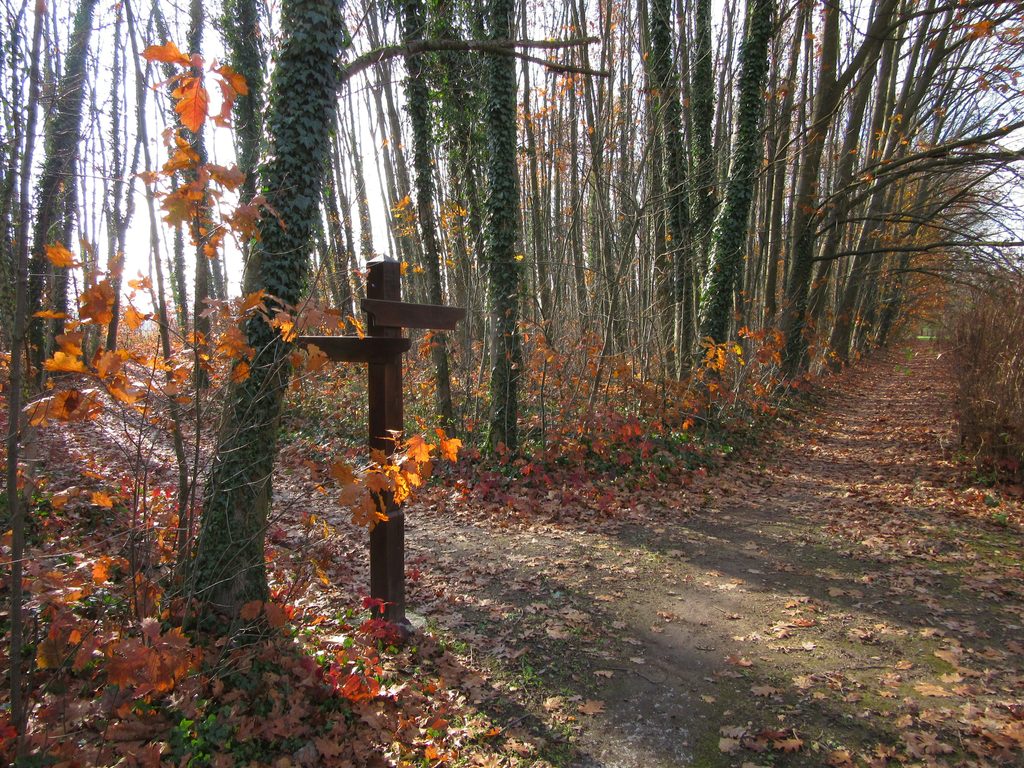
Image by estelle heitz from pixabay.com

Today we’re celebrating the dedication of our Oratory. I had intended to write a new post, but events overtook me. So I’m reposting this from the archives. The scripture reading at the vigil was from the first letter of St Peter:

“Be sure you are never spiteful, or deceitful, or hypocritical, or envious and critical of each other. You are new born, and, like babies, you should be hungry for nothing but milk – the spiritual honesty which will help you grow up to salvation – now that you have tasted the goodness of the Lord.”

Several things resonate with me in in. It’s reminder of how we are called to behave and to treat one another seems especially important just now. Living through stressful and challenging times can give us all a short fuse and doesn’t always bring out the best in us. St Peter reminds us that, whatever challenges and uncertainties we face we are called not to give into the temptation to spitefulness and criticism. The call is still to become more Christlike whatever we face.

He goes on to tell us that as we have tasted the goodness of the Lord already our desire and long should be for those things that will help us grow into our salvation. This brings to mind a favourite psalm, psalm 34, “taste and see that the Lord is good”, and I’m reminded to keep seeking the goodness of the Lord in whatever challenges and uncertainties life is currently throwing at us.

Where are you tasting the Lord’s goodness in the challenging times you have to face?

Categories
All Souls Benedictine Spirituality Christ Cross Divine Office Lectio Divina Liturgy Scripture

Consoled and Comforted.

Image by Adina Voicu from pixabay.com

A reflection from our archives for All Souls Day. Despite the change in tone from one feast to another, All Souls Day is intimately connected to All Saints Day. At heart both feasts speak to the basic equality of Christian faith. We are all one in Christ, and through our baptism, we are all equal before him.

Today’s feast is a time for acknowledging our mortality. It gives us the opportunity to acknowledge that death is a completely natural part of life. It is something we all share in and will all experience. This is one of the areas where we are called to stand out against the world’s way.

Today’s world denies death, pushing it aside or trying to micromanage it because of the pain, suffering and uncertainty it brings. Our faith calls us to look at death differently. It doesn’t call us to deny the pain, suffering and loss that death brings, but to accept it and embrace it. We are also called to look beyond it, to the hope that Christ offers us, even as we grieve.

The invitation & challenge are summed up for me in the prophet Isaiah’s words:

“The Lord will wipe away the tears from every cheek… That day, it will be said: see, this is our God in whom we hoped for salvation… We exalt and we rejoice that he has saved us.”

All Souls allows us to remember & grieve our loved ones. Yet, even as we grieve, it reminds us that the God of love will comfort and console us, offering us promise of new life in God’s presence.

Where do you need God’s comfort and consolation in your life today?

Categories
All Saints Benedictine Spirituality Christ Divine Office Lectio Divina Liturgy Saints Scripture

In the Company of Saints

Photo by Sebbi Strauch on unsplash.com

A reflection from the archives for the feast of All Saints. The feasts of all Saints and All Souls are intrinsically linked. I can never think of one without being aware of the other. They speak of a deep seated equality that is at the heart of the gospel. All Saints reminds us that through our baptism we are all one in Christ, equally called to live lives shaped by the gospel. Tomorrow’s celebration of All Souls allows us to reflect that other great equaliser, the impermanence of human life.

Today I’m reflecting on this from the first letter of St John:

“My dear people, we are already the children of God, but what we are to be in the future has not yet been revealed; all we know is, that when it is revealed we shall be like him because we shall see him as he really is.”

This is not a feast of the canonised and recognised saints of the church. They have their own feasts when we rightly celebrate their lives and example. Yet, while we greatly value this, it can distract us from those other unnamed and unrecognised saints who have built up the church through quiet, unrecognised faithfulness to the gospel and to their baptismal promises.

This is a celebration of the ordinary Christians who have striven to be faithful in all ups and downs of ordinary life. The people who have allowed their lives to be shaped by their faith so that in thousands of small, seemingly insignificant, ways they ease the burdens of those around them.

This is a day for celebrating all the children of God who will never be recognised officially as saints, but who have through their actions and example shared the love of God with their families, neighbours and workmates.

Where is Christ inviting you to share his love today?

Categories
Benedictine Spirituality Christ Gospel Lectio Divina Scripture

Being Ready

Photo by Thought Catalog on unsplash.com

Waiting is one of the hardest things we have to do in life. The end of the year is fast approaching. The Autumn colours, the cooler temperatures, the darker mornings and evenings are all pointing in that direction.

The same is true of today’s gospel. Its call to be alert and ready, waiting and prepared for the coming of the Lord reminds me that Advent is just around the corner. I’m struck by this in today’s gospel:

“You too must stand ready, because the Son of Man is coming at an hour you do not expect.”

Waiting is generally an uncomfortable experience, it’s often frustrating and stressful. It brings us face to face with the uncertainty we live with, with all those aspects of life that we can’t control.

It compels us to admit our lack, our limitations and our neediness. We can find a myriad of activities from constant busyiness to endless online connectivity to distract us from the discomfort it brings.

The gospel calls us away from those distractions. It invites us to embrace our times of waiting, giving our full attention to it, acknowledging its discomfort, and actively seeking the blessing it promises. As I reflect on this passage one of our Advent antiphons is running through my mind:

“Stand erect, hold your head high because your liberation is close at hand.”

It helps me to put this challenging call to wait into a wider context. This call to be ready comes with a promise. We stand ready, waiting for this promise to be fulfilled, trusting that the Lord will come to set us free from all that would distract us.

Where are you being called to be ready for the coming of the Lord today?

Categories
Benedictine Spirituality Christ Discernment Gospel Lectio Divina Prayer Scripture Uncategorized

Perseverance in prayer

Photo by Claudia Love on unsplash.com

Today’s gospel, the parable of the unjust judge, speaks so powerfully to our current situation that it could have been just written. Jesus tells his disciples the story of a judge who is refusing to give justice to a widow. However often the persistent widow is ignored or turned away she comes back, insisting on the justice that is her right. Eventually, the judge surrenders saying:

“Maybe I have neither fear of God nor respect for man, but since she keeps pestering me I must give this widow her just rights, or she will persist in coming and worry me to death.”

Looking around our world, there are so many awful situations that we can do little to change, that we might be tempted to give up. We can be tempted to surrender and hopelessness, so even praying begins to feel pointless and useless.

Jesus uses this parable to see the exact opposite. He reminds his disciples, and does, that rather than surrendering to hopelessness, these are precisely the situations where we need to persevere in prayer and hope:

“Jesus told his disciples a parable about the need to pray continually and never lose heart.”

There are so many painful situations in our world that seem unresolvable. There are so many places where cruelty and exclusion seem to be overwhelming our impulses to goodness and kindness. In all the pain and suffering of these circumstances Jesus challenges us to persevere. He calls us keep on speaking up for justice, fairness, kindness and compassion.

He challenges us to continually remind ourselves and others that all human beings of equal value in the sight of God. Most of all he reminds us to underpin all of our actions in these areas with constant and persistent prayer.

Where are you being called to continual prayer today?

Categories
Benedictine Spirituality Christ Gospel Lectio Divina Saints Scripture Uncategorized

Christ’s Peace

Photo by Tamara Menzi on unsplash.com

Today were celebrating the feast of St Luke, author of some of the best-known and most loved gospel stories. It’s not surprising then that today’s gospel focuses on the sending of the seventy-two to preach the Good News through the towns and villages.

Jesus gives them very specific instructions, telling them what to take and how to behave as they travel around the country. On their journey they are called to trust themselves completely to the providence of God and the kindness of strangers.

But he doesn’t send them out completely empty handed. He gives them a gift to pass on to the people they encounter:

“Whatever house you going to, let your first words be, ‘Peace to this house!’ And if people of peace live there, your peace will go and rest on them; if not it will come back to you.”

As we see communities torn apart by war and conflict across the world it’s hard to imagine a time when that peace has been more needed. This peace is no quick papering over of cracks. It requires that we do a certain amount of inner work to be able to receive it.

If we are to be people of peace, we have to allow our hearts to be changed. We need to risk letting the stories of the other change us. We have to be willing to let go let go of much that we cherish. We have to accept that we are not right about everything and to be willing to compromise.

Where is Christ calling you to change so that you can accept his peace today?

Categories
Christ Divine Office Lectio Divina Prophetic voices Saints St Teresa of Avila

The gift of love.

Image by Suppenkasper from pixabay.com

In these increasingly challenging and uncertain times it can be easy to despair and to lose hope. At such times it can be helpful to look for inspiration from the lives of others who’ve also faced challenges. Today, we’re celebrating the feast of St Teresa of Avila, Carmelite nun, reformer, theologian and Doctor of the Church.

She faced her many challenges with courage and perseverance. There’s much in her writings and in the example of her life to inspire and encourage us. I came across this from her writings:

“Whatever we think of Christ, let us always bear in mind that love of his which drove him to bestow upon us so many gifts and graces. Let us bear in mind to how great is the love God has shown us, since God has given us in Christ such a pledge of that love which God has for us; for love calls for a return of love.”

When life is difficult it seems surprisingly easy for us to lose sight of God’s love. The day-to-day struggles, the seemingly insurmountable challenges and anxiety leave us little energy to discover or reflect on that love. Yet, it is precisely at those times when life is hardest and most challenging that we need to be held and sustained by that love.

The love St Teresa speaks of is not the love of cinema or romantic novel that promises those happy ever after endings that are so beguiling, it is much stronger and deeper than that. Christ doesn’t promise that we won’t be hurt or disappointed, that we won’t feel pain or suffer.

Instead, he promises that whatever sufferings we face, whatever breaks our hearts and disappoints us, he will be there loving and sustaining us through it all.

Where do you need to be aware of the greatness of God’s love for you today?


Categories
#ConsecrateLife #SimplyJubilee Christ Jubilee Lectio Divina Scripture

With renewed hearts.

Photo by Nick Fewings on unsplash.com

In my last post for the #JubileeOfConsecratedLife I’m reflecting on this from the prophet Ezekiel writes:

“I shall give you a new heart, and put a new spirit in you; I shall remove the heart of stone from your bodies and give you a heart of flesh instead.”

His words bring me back to the heart of the Christian call and our Jubilee celebrations, the call of love. We are called into being by a loving God. Throughout our lives we are called to grow in that love, allowing it to shape our actions and relationships.

Inevitably the challenges and struggles of daily life draw us away from that goal. We act in ways that are less than loving. We put ourselves before others, considering our lives as more valuable than theirs, our needs as more worthy of being met.

Even while we do this, we know in our hearts it’s not good for us. We know that all humans flourish best when resources are equally shared, when everyone has what they need to live well. Our families, our communities, our societies work best when everyone has access to all they need to live with security and dignity.

A jubilee allows us to reset this balance. It calls us to undo the injustices that have crept in over the years. It’s a chance to return freedom to those who have been enslaved and to return stolen or lost property to those who have lost it.

Our jubilee celebrations call us to allow God to turn our stony hearts back into hearts of flesh so that we can respond with love and compassion to our neighbours once again.

Where do you most need God fill your heart with love and compassion?

Categories
#ConsecrateLife #SimplyJubilee Benedictine Spirituality Gospel Jubilee Lectio Divina Liturgy Monastic Life Rule of St Benedict Scripture

Forgiven and Forgiving.

Photo by Masjid MABA on unsplash.com

Today I’m reflecting on forgiveness. It’s central to our human experience. Both our need to be forgiven and our need to forgive are deeply rooted in the reality of our daily lives, in both big and small things. It’s impossible to live connected to other people without at some point needing to both forgive and be forgiven.

This reality is reflected all the way through Scripture. As we continue to celebrate the jubilee of consecrated life, I’m reflecting on these words from the Our Father:

“Forgive us our sins, for we ourselves forgive each one who is in debt to us.”

These words are so familiar that we sometimes overlook their significance. Yet, they have the power bring the healing that can reset our broken relationships.

St Benedict recognises this when he says that the Our Father should be said by the superior at Lauds and Vespers “because thorns of contention are likely to spring up”. It allows us to acknowledge before God that, whatever our intentions, we will have been hurt by others in the course of the day, and we will have hurt them.

St Benedict wanted the community to be reminded regularly both of their need for forgiveness and their need to forgive others in the course of their daily life.

These two are intimately linked. We begin by acknowledging our own need for forgiveness. When we know ourselves held in the loving forgiveness of God then we are able to reach out and offer forgiveness to the people who have wounded us.

Where are you being called to offer and accept forgiveness today?

Categories
#ConsecrateLife #SimplyJubilee Benedictine Spirituality Christ Discernment Jubilee Lectio Divina Scripture

A justice rooted in love.

Photo by Jesse Gardner on unsplash.com

Today I’m reflecting on justice. As an ex-primary school teacher every time this word comes into my mind I hear a myriad of children’s voices calling “Miss, that’s not fair!” I remember making the same complaint myself.

Like most of us I also remember the pain of discovering the reality that life often isn’t fair. Rather than just being a childish dream, this early concern with fairness suggests that we carry in our hearts a deep sense of fairness from when we are very small.

It might get thwarted and bent out of shape, but I believe that somewhere deep within our hearts we recognise and value true justice. However self-centred or self-serving we become we carry the knowledge within us that humans flourish best when everyone is treated with justice.

Justice is not straightforward. We don’t have to look very far before we see our human justice being abused and misused, despite our best efforts. Reflecting on justice reminds us that God is not like us, as Isaiah tells us:

“For my thoughts are not your thoughts and your ways are not my ways, declares the Lord. For the heavens are as high above earth as my ways are above your ways, my thoughts above your thoughts.”

Part of the call of a Jubilee is to bring our understanding of justice closer to God’s. God’s justice is always firstly based on love. It’s the love that invites us into a covenantal relationship, and then offers us countless opportunities to find our way back to that relationship when we have wandered away from it. Our jubilee calls us to reflect on our understanding of justice and to ensure that, like God’s it’s based firstly on love.

How does the faithful love of God affect your understanding of what justice is?