Categories
Benedictine Spirituality Christ Eastertide Gospel Lectio Divina Liturgy Prophetic voices Resurrection Scripture Uncategorized

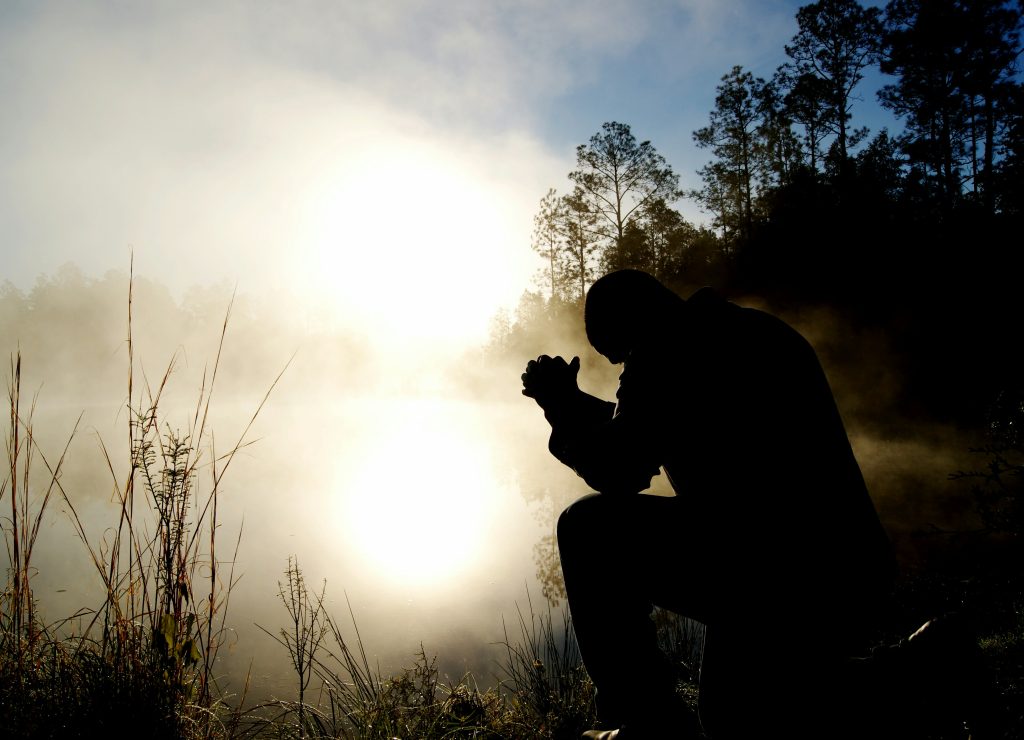
Out of the shadows.

Photo by D. Jameson RAGE on unsplash.com

SHADOW

Today’s Eastertide word is: SHADOW. It doesn’t comfortably sit with Eastertide, the season of light and new life. Yet, there are plenty of shadowy moments in the Easter gospel, the Acts of the Apostles and our own Eastertide experiences. The light of the risen Christ can make as even more aware of our shadows.

Today is the feast of St Joseph the worker. In many ways it’s hard to imagine a more shadowy figure. He is always in the background, supporting Mary and the child Jesus, bringing stability and respectability to difficult situation.

Yet, if we look beyond that image we find a different story. I’m reflecting on these words from a hymn for his feast:

“His love was humble, flame of God’s own fire,
A light to guide the path he trod alone;
Like Abraham, like Moses he believed,
And went in faith to find a land unknown.”


They speak of a man of great faith who is not afraid of the shadows. He allows them to guide him into God’s light following in the footsteps of his ancestors, leaving everything to follow God into the unknown. It can’t have been an easy choice, it will have required both humility and courage.

It’s impossible to think of this without reflecting on the ever-darkening shadows that overwhelm our world today. In such shadowy times St Joseph can be a valuable role model for us.

In this challenging Eastertide St Joseph reminds us that however dark shadows seem the risen will be with us, leading us into new life by the light of his love.

What are the shadows that you need the risen Christ to dispel in your life this Eastertide?

Categories
Benedictine Spirituality Christ Cross Eastertide Gospel Lectio Divina Liturgy Resurrection Scripture

The feast of St George

Image by Andrea Don from pixabay.com

UNITY

UNITY is central to the message of Eastertide. The resurrection gospel show as the disciples drawing into a new community that supports and protects one another. This means they have to learn to let their barriers down, and risk to others.

Our challenging times incline us to build barriers that we can hide behind. They draw towards protectionism, keeping ourselves safe at the expenses of others. The example of St George, whose face we celebrate today, shows us this is not the call of the risen Christ.

As a Syrian in the Roman army who is patron saint of at least England, Russia, Ethiopia and Georgia St George offers us the opportunity to expand our horizons. He reminds us that our common humanity extends beyond borders and nationalities. He shows us that our hope lies in breaking down barriers, reaching out to the stranger, not in building them higher and excluding people.

He had the courage to stand up to the evil of his day, slaying the “dragons” of his times wherever he could. This offers us courage and hope. In our own times we face plenty of “dragons” unleashed the wars, migration, economic, social and political challenges.

It’s not call without risks. In his second letter to Timothy St Paul writes:

“Indeed, all who desire to live a godly life in Christ Jesus will be persecuted.”

As we celebrate the feast of St George it seems to me that we are called risk persecution to reach out others, seeking unity and reconciliation wherever we can.

Where is the risen Christ calling you to risk seeking unity today?

Categories
Benedictine Spirituality Christ Eastertide Gospel Lectio Divina Resurrection Scripture

Rediscovereing Hope.

Photo by Oxana Daeva on unsplash.com
 

HOPE

HOPE is central to Eastertide. Today, we get another opportunity to revisit the Emmaus gospel. I’m glad to revisit a story that is so full of riches that it always offers us something new to reflect on.

At the beginning of their journey the disciples are despairing and hopeless, so drained they can barely drag themselves along the road to their home. We can almost feel the hopelessness from Luke’s description, we may also recognise it from our own experience.

It’s hard to see how they can move from this draining hopelessness to the energising hope we see at the end of the gospel. When a compelling stranger draws alongside them, asking what they are discussing their hopelessness overflows. Full of sadness they tell him:

“They stopped short, their faces downcast…Our own hope had been that he would be the one to set Israel free.”

Jesus gently unfolds the truth for them, challenging but never forcing, moving at a pace they can cope with. Some small spark of recognition is kindled in their hearts, and a tiny shoot of hope takes root.

It compels them to invite Jesus to stay with them when they reach home, and enables them to recognise him as he blesses the bread. As they recognise him their hope begins to blossom again:

“Did not our hearts burn within us as he talked to us on the road and explained the scriptures to us?”

In our dark times when hope feels impossible, the risen Christ also walks alongside us. If we allow him in, he can rekindle a hope that will set us free and give us the courage for these times.

Where do you need the risen Christ to help you rediscover hope this Eastertide?

Categories
Benedictine Spirituality Discernment Eastertide Gospel Lectio Divina Liturgy Resurrection Scripture

With Fears Calmed

Photo by Giulia Veneziano on unsplash.com

FEAR

FEAR is another word we don’t often connect with Eastertide. Yet there is a plenty of fear in the resurrection gospels as the disciples try to process all that has gone on. Today’s gospel reflects the disruption of that time. Our own stormy times make it easier to identify with the disciples response to the unexpected storm that threatens them.

I imagine them longing for rest and the opportunity to process some of the strange events they’ve witnessed over the previous days. As darkness falls and they climb into the boat they must have been hoping for a quiet, peaceful crossing to Capernaum.

It wasn’t to be, as they get further from the shore the wind and the waves get stronger and a storm blows up. They find themselves buffeted on all sides as wave after wave threatens to overwhelm their small boat.

Struggling to control the boat they see Jesus walking towards them across the water. Initially his appearance seems to do little to help their situation. The strange sight of him walking towards them over the stormy lake only increases their already mounting fear. Then Jesus speaks to them, and everything changes:

“It is I, do not be afraid.”

His words offer them consolation and calms their fears and they reach the shore safely. As we face our own stormy times we too need to hear Christ’s voice calming our fears and assuring us that, with his grace we will come through our storms.

Where do you need to hear the risen Christ calming your fears this Eastertide?

Categories
Benedictine Spirituality Christ Eastertide Gospel Lectio Divina Resurrection Scripture

Co workers with Christ

Photo by Kate Remmer on unsplash.com

COLLABORATION

Reflecting on John’s account of the miracle of the loaves and fishes I’m struck by how Jesus involves the disciples in what he plans to do. I’m sure Philip thought it was crazy to be expected to feed such a large crowd.

Andrew was uncomfortably aware that the five loaves and two fish were not going to go very far with such a crowd. Yet, having trusted Jesus and followed his instructions they witnessed the miracle of everyone getting what they needed:

“Then Jesus took the loaves, gave thanks and gave them out to all who were sitting ready; he then did the same with the fish, giving out as much as was wanted.”

Jesus didn’t need to involve his disciples in this. As is so often the case in John’s Gospel Jesus knows exactly what he’s going to do. Instead he chooses to invite them to work with him to meet the needs of the people, regardless of their lack of understanding.

He shows them, and us, a model of discipleship based on collaboration and sharing. He wants his kingdom to be a collaborative one where people share their gifts and talents freely with others. He wants no one to be without, and no one to be overburdened by having to meet every need by themselves.

In our own challenging and often brutal times he invites us to work with him and with those around us to continue building his kingdom today. He challenges us to use our limited and often meagre resources so that no one is left without the basic necessities of life.

Where is the risen Christ calling you to work collaboratively with him today?

Categories
Benedictine Spirituality Christ Eastertide Gospel Lectio Divina Resurrection Rule of St Benedict Scripture

Stepping into obedience.

OBEDIENCE

Photo by Andreea Pop on unsplash.com

Obedience is one of the foundation stones of Christian life. There is never a time when it is not relevant. We are always called to listen and respond to the word God speaks to our hearts.

This is true in every aspect of our lives yet, I’m a little surprised to find myself writing about it in Eastertide. Central as it is it’s we are more likely to connect it to Lent or Advent than to Eastertide.

It’s possible that we mistakenly connect Eastertide with more positive ideas. Joy, awe, praise, thankfulness more readily come to mind in this season. None of these are easy, but, on a surface level at least, they feel a little more comfortable than obedience.

Yet, in today’s first reading from the Acts of the Apostles Peter puts obedience at the heart of the Easter message. When he is challenged by the Sanhedrin about why he has disobeyed them he replies:

“Obedience to God comes before obedience to humans…”

His words are an inspiration and a challenge. Obedience is hard work, though it doesn’t require that we risk our lives as those first disciples did. It will challenge us to put ourselves aside in real and costly ways. It requires a constant attentiveness to God’s word and to the needs of our times. It constantly calls us to discern where we hear the voice of God and to act on it regardless of personal preferences.

Where is the risen Christ calling you to take obedience seriously this Eastertide?

Categories
Benedictine Spirituality Christ Discernment Eastertide Gospel Lectio Divina Resurrection Scripture

Into the light

Photo Barnabas Hertelendy on unsplash.com

LIGHT

Today’s word is LIGHT. Our times seem to be growing increasingly dark. In every direction it seems that life is getting harder. The cost of living crisis leaves people struggling to feed their families.

The disruption and suffering of war affects more and more people. The world order that we thought was stable & secure appears to be crumbling before our eyes, leaving life feeling unsettled and vulnerable.

In such times it’s hard to see how any light could penetrate the gloom. As the struggles of daily life get harder we can easily forget the light Christ brings us.

We can even be scared of what it might expose in our lives and relationships. Today’s gospel, part of Jesus’ conversation with Nicodemus, speaks to this dilemma.

Like us, Nicodemus lived in precarious times. A wealthy man, walked a thin line between the Roman occupying forces and commitment to his own people and faith. Jesus challenges him to step away from the darkness into the light of God’s love:

“Those who live by the truth comes out into the light, so that it may be plainly seen that what they do is done in God.”

We too need and desire this love. We know that this is the light that will lead us through the darkness of our times to the new life offered by the risen Christ. It’s a light that will expose our darknesses. It’s also the light that will heal our wounds and allow us to grow and flourish in the presence of the light of the risen Christ.

Where is Christ calling you to come out into the light of his love this Eastertide?

Categories
Benedictine Spirituality Christ Eastertide Gospel Lectio Divina Lent Resurrection Rule of St Benedict Scripture

United Heart and Soul.

Photo by Robert Bye on unsplash.com
 

COMMUNITY

COMMUNITY is at the heart of the gospel, and of what it is to be human. We are created to be in relationship with one another, with creation and with God. We can live individualistic and isolated lives, but we thrive best when we live in relationship with others.

It’s hardly surprising then that the resurrection calls Jesus’s followers together after they were scattered. It’s from this regrouping that the early church is born. Today’s reading from the Acts of the Apostles describes the ideal at the heart of this new community:

“The whole group of believers was united, heart and soul; no one claimed for their own use anything that they had, as everything they owned was held in common.”

This ideal still lies at the heart of the Church. It underpins the life of our parishes, and is at the heart our concern for the excluded and the marginalised. It’s was the basis of the life lived by the desert Fathers and Mothers.

It was taken up by the early monastic communities and is one of the main foundations of Benedictine life today. As a Benedictine it’s a principle that’s close to my heart.

Yet, however much we value the principle we often fall short of the ideal. St Benedict gives us a very clear idea of why that is:

“They must compete with one another in obedience. They should not pursue what they judge advantageous for themselves, but rather what benefits others. They must show selfless love to the community.”

Living in community is hard work. It demands that we put love at the heart of our lives in very real and concrete ways every day. It calls us to accept people as they are and to put their needs before our own regardless of whether we agree with them or like them.

Where is the risen Christ calling you to build community this Eastertide?

Categories
Benedictine Spirituality Christ Eastertide Gospel Lectio Divina Liturgy Prayer Resurrection Rule of St Benedict Scripture

An Eastertide Vocabulary.

Photo by Emmanuel Phaeton on unsplash.com

One of the most helpful books I’ve read is “Amazing Grace, a vocabulary of faith.” By Kathleen Norris. She describes it as “an exploration and record of some of the words in the Christian lexicon that most trouble and attract me.”

The book reminded me of an important Benedictine principle, that words matter. They shape us, form us, challenge us and help us grow.

Last year I made a Lent lexicon. This year I’m aiming to make an Eastertide one. I’ve chosen words that attract and sometimes scare me. They also both shape and challenge my experience of Eastertide.

I’m including words that are particularly connected to Eastertide, and words that, though they’re connected to other seasons might have a different resonance in this Eastertide.

Categories
Benedictine Spirituality Christ Divine Office Eastertide Gospel Lectio Divina Liturgy Resurrection Scripture

Believe and Doubt

Photo by sayrmund (aka Oleg Cloes) on unsplash.com

All week we’ve seen the risen Christ appear to the disciples in slightly different way. Each appearance is tailored in some way to touch the heart of a particular disciple, and this gives them their deeply personal and intimate quality. Today’s appearance to Thomas follows the same pattern.

He comes to his encounter with the risen Christ after what I imagine was a hard week. There’s nothing worse than being the one person in a group who missed a significant event.

It must have left Thomas feeling isolated and on the fringes. His directness and honesty prevent him from taking their account on trust. He knows himself well enough to know that he needs to see this for himself, saying to the disciples:

“Unless I see the holes that the nails made in his hands and can put my hand into his side, I refuse to believe.”

I’m touched by how open and vulnerable Thomas is prepared to be about this need. Jesus’ response when he appears to Thomas is focussed on giving Thomas what he needs.

He doesn’t judge or criticise, instead he invites Thomas to reach out and touch him in exactly the way Thomas said he needed:

“Put your finger here; look, here are my hands. Give me your hand; put it into my side. Doubt no longer, but believe.”

Jesus’ acceptance of Thomas with all his doubts and uncertainties leads him to the light of truth, freeing him to make his profession of faith, acknowledging Jesus as the Christ:

“My Lord and my God!”

What would help you to recognise the presence of the risen Christ in your life today?