
Categories
Benedictine Spirituality Christ Eastertide Eucharist Gospel Lectio Divina Liturgy Prophetic voices Resurrection Scripture

With hearts aflame.

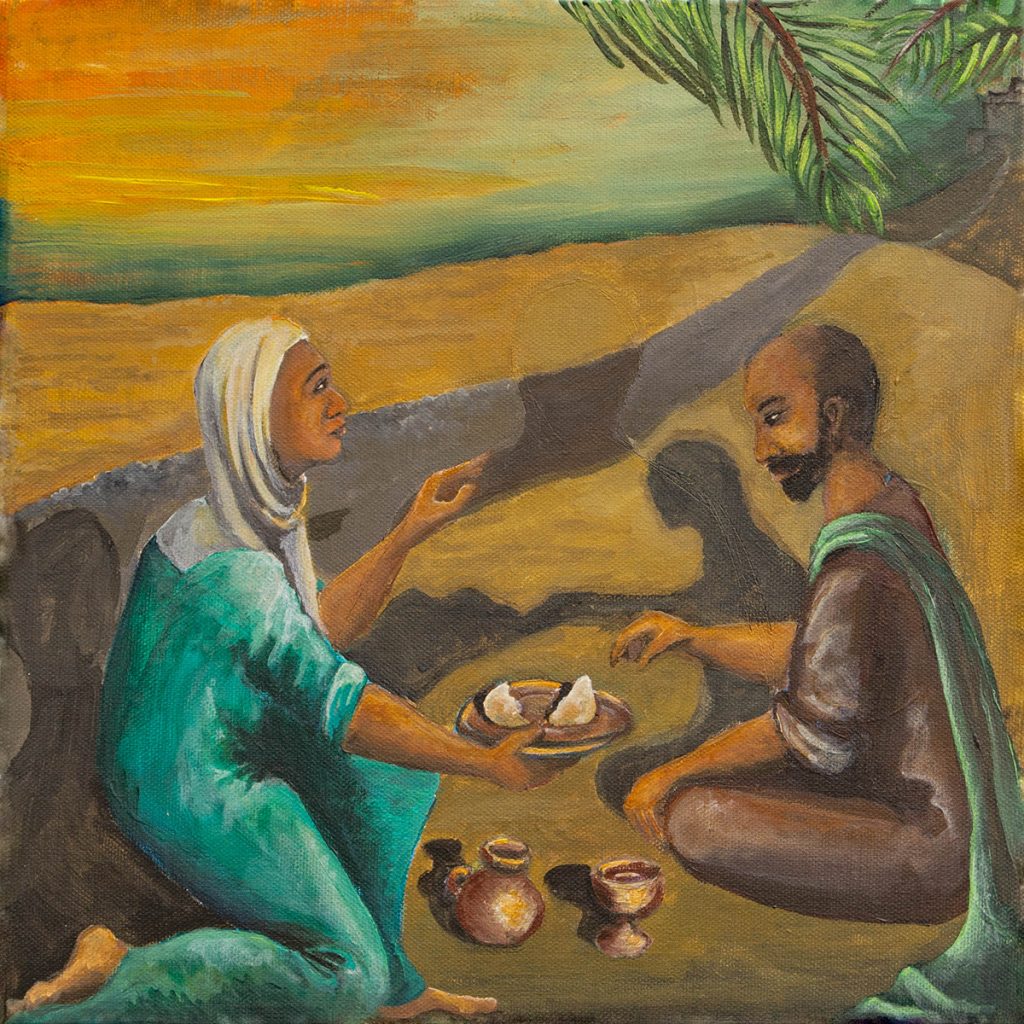
Image © Ally Barrett (www.reverendally.org) and used by permission

BACKGROUND READING LUKE 24: 13-35

Mary is the wife of Cleopas. A follower of Jesus, she witnessed his death. After the crucifixion, she sets out with her husband to return to Emmaus. They feel so heartbroken and hopeless that they can barely drag themselves along the road.

Before they felt they’d heard the other women’s story of the empty tomb. Initially it rekindled Mary’s hope, but it died again when they saw nothing had changed in the world around them.

As they walk along, Mary reflects on how her expectations of Jesus turned out to be so different to what happened. As she argues with Clopas about all that has happened a stranger joins them and asks what they are talking about.

They pour their hearts out to him, sharing their pain and disappointment. His response begins to heal their hearts, allowing hope to be rekindled:

“He told my story – all my hopes and my dreams – in the words of scripture. My heart leapt and burnt within me.”

As they approach their village and the stranger makes to leave them, Mary realises that she wants him to stay:

“All of a sudden, I couldn’t bear the thought that this stranger might leave us. It seemed that Cleopas felt the same, and so we begged and cajoled, pleaded and persuaded him to eat with him.”

When he takes the bread and blesses it, as he’d done day in day out on their travels, she recognises him and her world is transformed.

The sadness and hopelessness vanish. Their tiredness disappears, and they practically fly back to Jerusalem to share this great news with the others.

However hopeless life might feel the risen Christ walks alongside us. He is always looking for an opening to help us discover our own story in the scriptures.

Where are you aware of the risen Christ walking alongside you this Eastertide?

You can listen to Mary’s story here:

Categories
Benedictine Spirituality Christ Communion Divine Office Eucharist Foot washing Gospel Lectio Divina Lent Liturgy Maundy Thursday Scripture

Extragavant love… Extragavant heartbreak

BACKGROUND READING MARK 14: 12-25

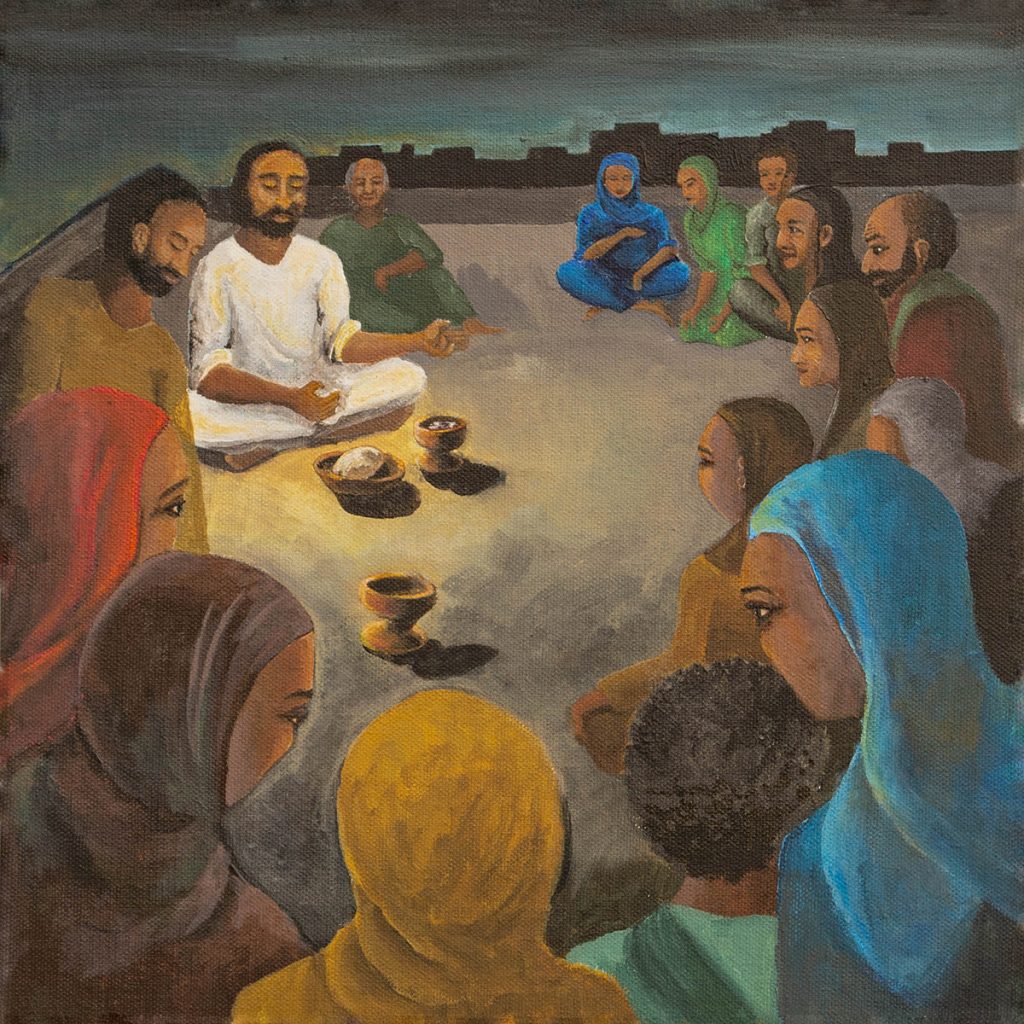
Image © Ally Barrett (www.reverendally.org) and used by permission

Joanna was one of the group of women who follows Jesus. The wife of Chuza, Herod’s steward, she was part of the group who used their personal resources to provide for Jesus. Feeling stifled by life at court she went to Capernaum to hear Jesus speak and became a follower.

Joining Jesus in Jerusalem for Passover Joanna was anxious and unsettled. She senses a dark shadow hanging over them. Jesus has started to talk about suffering, death and rising again.

This added to her sense of foreboding. She found a practical outlet for her stress, worrying about where they will celebrate the Passover. Eventually she snaps at Jesus:

“So where do you want us to go and make preparations for you to eat the Passover?”

To her relief, Jesus had it in hand. She went off with Susannah to make the arrangements and found everything as he said it would be.

They gathered to celebrate the Passover, drawing strength from the shared meal and remembering the story of their freedom. They received Jesus’ offering of his body and blood in the form of bread and wine, though they don’t understand its significance.

As Jesus left for Gethsemane with the disciples her discomfort turned to dread. Her friend sums up what they are facing:

“That’s the problem with extravagant love, it leads to extravagant heartbreak.”

Those words also touch the heart our Maundy Thursday liturgies that acknowledge both the best and the worst we can be. We all recognise the intimate link between the love and heartbreak.

How is the extravagant love of Christ helping you to face your heartbreak this Holy Week?
You can listen to Joanna’s story here:

Categories
Benedictine Spirituality Christ Discernment Eucharist Gospel Holy Spirit Lectio Divina Scripture Uncategorized

Invitation & challenge.

Image by xmmr89 from pixabay.com

Today’s readings speak of invitation, call and challenge. In the first reading Wisdom sends her maidservants out into the city to invite everyone to:

“Come eat my bread, drink the wine I have prepared! Leave your folly and you will live, walk in the ways of perception.”

In the gospel Jesus also has an invitation, as he offers us his very self:

“I am the living bread which has come down from heaven. Anyone who eats this bread will live forever; and the bread which I shall give is my flesh, for the life of the world.”

He invites us to choose the life-giving over the often beguiling death dealing:

“I tell you most solemnly… Anyone who eats my flesh and drinks my blood lives in me and I live in them… Anyone who eats this bread will live forever.”

The challenge in both these invitations is to change. Wisdom’s call to walk in the “ways of perception” requires that we examine how we live in the light of God’s teaching and to make changes where necessary.

The gospel carries a similar message. However devoted to and sustained we are by the Eucharist, by itself it is not enough. The invitation to partake in the Eucharist is a call to imitate Jesus’ life of loving service in all areas of our lives.

In the letter to the Ephesians St Paul grounds this theme even more explicitly in the reality of our daily interactions. He writes:

“Be careful about the sort of life you lead… Do not be thoughtless but recognise what is the will of the Lord… Be filled with the Spirit.”

While each of the readings draws us into a meaningful and sustaining spiritual practice, they also point as beyond it. They invite us to is to allow the spiritual practices affect our behaviour in every part of life. The challenge is to let the love of God we have received shine through in every encounter, every interaction and every relationship of our lives.

Where is Christ calling you to model your life on his today?

Categories
Benedictine Spirituality Christ Corpus Christi Divine Office Eucharist Gospel Lectio Divina Liturgy Prayer Scripture Uncategorized

Recognising Christ

Image by Aline Ponce from Pixabay

Because of a problem with the site I haven’t been able to post for a few weeks. As it’s always worth reflecting on the Eucharist I thought I’d post this even though the feast is past! As we celebrate the feast of Corpus Christi I’m reflecting on the nature of Eucharist. The Scripture that comes to mind is the Emmaus story. Although it’s not part of the feast’s liturgy it seems to me to capture something of its essence.

It acknowledges the despair and hopelessness of the disciples as they trudged home disappointed and unsettled by all that has happened. We can identify so strongly with those feelings in our own lives that we almost feel the weight of it all as they pour out their story to Jesus. They remind me that Eucharist offers us an opportunity to bring our brokenness, hurt and disappointment into the presence of Christ.

Jesus responds to their despair by taking them through the Scriptures already know, reminding them of the passages that speak about the Messiah. As he does this their hearts are ignited, and through their sadness they glimpse something so good that they don’t want to let it go, so they invite him to stay with them. Full recognition only dawns as they sit down to eat together and:

“He took the bread and said the blessing; then he broke it and handed it to them. And their eyes were opened, and the recognised him…”

It seems to me that the essence of the Eucharist is an invitation rediscover the reality of Christ’s presence in every part of our lives, in our liturgies, in our communities, in all our relationships and activities.

As we celebrate the feast of Corpus Christi where do you recognise the reality of Christ’s presence in your life?