
Categories
Benedictine Spirituality Christ Divine Office Eastertide Gospel Lectio Divina Scripture

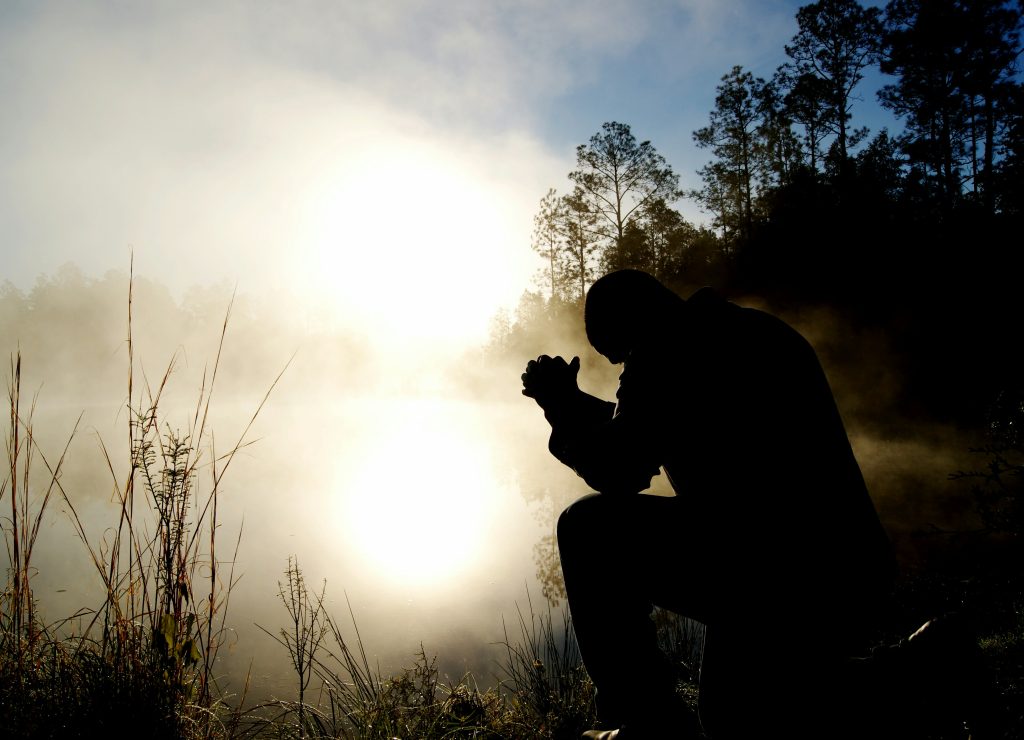
An invitation

Photo by frogses production on unsplash.com

There’s a lot to ponder on in today’s gospel. Peter’s decision to go fishing, returning to the safe and familiar in times that are disturbing and unsettling. Or the lack of a catch as they fish through the night.

Or Jesus’ calling to them from the shore, telling them to try another direction, and the amazing catch that results from that. The dawning recognition of the who the stranger on the shore is. Or Peter’s impulsive dive into the sea in his eagerness to get to Jesus.

Yet every year the image that most draws me is of Jesus preparing breakfast for them while they are fishing. I imagine him gathering driftwood and lighting the fire, laying out the bread and preparing the fish, and then calling out his invitation to the cold, tired disciples:

“Come and have breakfast…”

These simple, ordinary actions are the life affirming, life giving acts of love of Christ, the servant King. They ground me in the messy and material reality of human life, the only place where we can encounter the risen Christ. They are an invitation to love and new life.

In a world full of injustice and misery the image of the servant King has new power and a deeper resonance. We are called to imitate the simple and straightforward service of the risen Christ, to help those around us with acts that can lighten burdens, bring hope and open hearts and minds.

What is the Risen Christ inviting you to this Eastertide?

Categories
Benedictine Spirituality Christ Divine Office Eastertide Gospel Lectio Divina Resurrection Scripture Uncategorized

The gift of peace

Image by Tapani Hellman from pixabay.com

Listening to today’s gospel I’m struck by the alarm and fright that the disciples feel when the risen Christ appears among them I sympathise with their feelings.

Unlike us, they don’t have the experience of hindsight, tradition and faith telling them that the resurrection is already a reality. I’m touched by Jesus’ response to their reactions. His first greeting to them is:

“Peace be with you.”

From that moment, for the rest of his time with them his concern is to calm and reassure them, explaining how the Scriptures, the Law and the Prophets refer to him and opening their hearts to understand his teaching.

There’s much in life today that can leave us fearful. The wars that are threatening our world order, the growing uncertainty in areas that we thought were certain can all engender fear even before we begin to think about more personal situations.

Our fear can leave us feeling just as locked in as the disciples were in those first few days after the resurrection. We think of Eastertide as a time of rejoicing, that can leave us feeling guilty if our response is less than joyful.

The Easter Gospels remind us that Jesus doesn’t criticise his disciples for their fearful response to his appearance. Instead he calms their fears, reassures them and sets them free to embrace the new life of resurrection. Whatever we face he offers us that same reassurance and freedom.

Where do you need the risen Christ to reassure you and calm your fears this Eastertide?

Categories
Benedictine Spirituality Christ Eastertide Eucharist Gospel Lectio Divina Liturgy Prophetic voices Resurrection Scripture

With hearts aflame.

Image © Ally Barrett (www.reverendally.org) and used by permission

BACKGROUND READING LUKE 24: 13-35

Mary is the wife of Cleopas. A follower of Jesus, she witnessed his death. After the crucifixion, she sets out with her husband to return to Emmaus. They feel so heartbroken and hopeless that they can barely drag themselves along the road.

Before they felt they’d heard the other women’s story of the empty tomb. Initially it rekindled Mary’s hope, but it died again when they saw nothing had changed in the world around them.

As they walk along, Mary reflects on how her expectations of Jesus turned out to be so different to what happened. As she argues with Clopas about all that has happened a stranger joins them and asks what they are talking about.

They pour their hearts out to him, sharing their pain and disappointment. His response begins to heal their hearts, allowing hope to be rekindled:

“He told my story – all my hopes and my dreams – in the words of scripture. My heart leapt and burnt within me.”

As they approach their village and the stranger makes to leave them, Mary realises that she wants him to stay:

“All of a sudden, I couldn’t bear the thought that this stranger might leave us. It seemed that Cleopas felt the same, and so we begged and cajoled, pleaded and persuaded him to eat with him.”

When he takes the bread and blesses it, as he’d done day in day out on their travels, she recognises him and her world is transformed.

The sadness and hopelessness vanish. Their tiredness disappears, and they practically fly back to Jerusalem to share this great news with the others.

However hopeless life might feel the risen Christ walks alongside us. He is always looking for an opening to help us discover our own story in the scriptures.

Where are you aware of the risen Christ walking alongside you this Eastertide?

You can listen to Mary’s story here:

Categories
Benedictine Spirituality Christ Discernment Easter Sunday Eastertide Gospel Lectio Divina Liturgy Resurrection Scripture

Space for Christ

Image Photo by Ryan Byrne on unsplash.com

By Easter Tuesday the mixture of adrenalin and energy that carried me through the Easter Vigil is waning, and I start to feel the need to slow things down. It’s rightly an energetic season, full of rejoicing, celebration and proclamation. While that delights me, I’m also aware that I need space in the midst of it all to pause and reflect.

In Christmastide we have the example of Virgin Mary taking space to ponder the events in her heart. She reminds us that we too need time to reflect on our encounters with God. We need a similar model in Eastertide, someone who will remind us to slow down, to allow the momentous event that is resurrection to really sink in.

Listening to today’s gospel, the appearance to Mary Magdalene, I noticed a stillness in the account that I’ve missed on other occasions. After her journey through the dark and the rush to find the disciples Mary is left alone. She stops and is still, waiting in her grief for something she can’t possibly understand. It is in this moment of stillness that she encounters the risen Christ. It brings to mind part of my favourite hymn:

“She awaits a new creation in the shadow of the tomb. Hope and trust and expectation, from it will a vision come.”

Pondering this I realise that I too need a still, quiet moment to encounter the risen Christ as she did in the garden, remaining alone and quiet in his presence, allowing the new creation to take root in my heart.

Where are you finding space to encounter the risen Christ in the depth of your heart?

Categories
Benedictine Spirituality Christ Divine Office Easter Sunday Easter Vigil Eastertide Good Shepherd Gospel Lectio Divina Liturgy Resurrection Scripture

Called And Named

Image © Ally Barrett (www.reverendally.org) and used by permission

BACKGROUND READING JOHN 20: 1-18
AND JOHN 10 1-6

Mary’s story is about being lost and found. She met Jesus when she was completely lost. “Possessed by evil spirits” she was wandering the countryside, too disturbed to be still.

When she heard Jesus teaching by the lake, a wave of peace washed over her. he became his follower. She sat at his feet with the other disciples, listening, learning and being changed by his words.

The crucifixion was another overwhelming loss. She tried to get the disciples to come and anoint Jesus’ body, but found them too devasted and scared to leave their rooms.

She gathered the other women to help her instead. When they arrived at the tomb, they found the stone rolled away and a young man waiting inside. They dropped everything and ran away.

Mary went back to the other disciples, telling them that, on top of everything else, Jesus’ body had been taken. Peter and John ran with her to the tomb to see for themselves. She arrived after they left, and stood weeping by the empty tomb, overwhelmed again by the loss.

Initially mistaking him for the gardener she recognised Jesus when he called her by name. It’s a moment that takes her back to the first story she heard him tell, the good shepherd:

“The good shepherd had called my name, and I knew his voice with every fibre of my being.”

In our lost times we too need to hear the risen Christ, calling us home to live in the light of his love.

Where do you hear the risen Christ calling you to live in his love this Easter morning?

You can hear Mary’s story here:

Categories
Benedictine Spirituality Christ Cross Divine Office Good Friday Gospel Holy Week Lectio Divina Lent Liturgy Scripture Triduum

Being There.

Image © Ally Barrett (www.reverendally.org) and used by permission

BACKGROUND READING MARK 15:1-41 AND
JOHN 19 17-37 OR JUST JOHN 19 17-37

Salome was one of women who followed Jesus through his passion and death to his resurrection.

Salome’s story is about remembering and forgetting. She remembers her friendship with Mary growing up in Nazareth. She remembers it falling apart after the angel’s visit, and being rediscovered after Mary, Joseph and Jesus returned from Egypt. She remembers how she initially followed Jesus for Mary’s sake, until his words touched her and she begins to follow for herself.

She remembers how, when they hear of Jesus’ arrest, they follow him to his trial and passion. She tells us that, with breaking hearts and dying hopes, they keep vigil at the cross while he dies.

Salome also knows what it feels like to be forgotten. She repeatedly reminds Peter and the other disciples that not all of Jesus’ followers ran away at his arrest. She admits that this might have been habit as much as virtue:

“It’s what I’ve always done. When disaster strikes and I don’t know what to do, I do what I normally do – day in, day out – until the moment comes when I do know what to do again. So, when we heard, when it felt as though the world was collapsing around us, we did what we’d been doing for the past few years. We followed him.”

When we come to the cross on Good Friday we are invited to remember the marginal. We are called to stand with those society rejects, ignores, and pushes aside. We are challenged to become one with them in Christ.

The cross also invites us to bring those parts of ourselves that we reject and ignore. We are called to bring them to the cross, to be welcomed into Jesus’ gaze of “pure love”.

As you stand before the cross this Good Friday where do you need to feel the pure love of Christ your life?
You can hear Salome’s story here:

Categories
Benedictine Spirituality Christ Communion Divine Office Eucharist Foot washing Gospel Lectio Divina Lent Liturgy Maundy Thursday Scripture

Extragavant love… Extragavant heartbreak

BACKGROUND READING MARK 14: 12-25

Image © Ally Barrett (www.reverendally.org) and used by permission

Joanna was one of the group of women who follows Jesus. The wife of Chuza, Herod’s steward, she was part of the group who used their personal resources to provide for Jesus. Feeling stifled by life at court she went to Capernaum to hear Jesus speak and became a follower.

Joining Jesus in Jerusalem for Passover Joanna was anxious and unsettled. She senses a dark shadow hanging over them. Jesus has started to talk about suffering, death and rising again.

This added to her sense of foreboding. She found a practical outlet for her stress, worrying about where they will celebrate the Passover. Eventually she snaps at Jesus:

“So where do you want us to go and make preparations for you to eat the Passover?”

To her relief, Jesus had it in hand. She went off with Susannah to make the arrangements and found everything as he said it would be.

They gathered to celebrate the Passover, drawing strength from the shared meal and remembering the story of their freedom. They received Jesus’ offering of his body and blood in the form of bread and wine, though they don’t understand its significance.

As Jesus left for Gethsemane with the disciples her discomfort turned to dread. Her friend sums up what they are facing:

“That’s the problem with extravagant love, it leads to extravagant heartbreak.”

Those words also touch the heart our Maundy Thursday liturgies that acknowledge both the best and the worst we can be. We all recognise the intimate link between the love and heartbreak.

How is the extravagant love of Christ helping you to face your heartbreak this Holy Week?
You can listen to Joanna’s story here:

Categories
Benedictine Spirituality Christ Gospel Lectio Divina Lent Prophetic voices Scripture

Freedom

Image © Ally Barrett (www.reverendally.org) and used by permission

BACKGROUND READING MATTHEW 26: 6-13 MARK 14: 3-9 LUKE 7: 36-50 JOHN 12: 1-8. OR JUST MARK 14: 3-9

Susannah was wealthy and well loved, living a privileged life. Reflecting on this later she says: “I had no idea how lucky I was.” On the surface her life of privilege carries on after her marriage as she moves from one comfortable, spacious home to another.

Her husband was a harsh man who relished hurting people. When, after several years, he put her aside he spreads rumours that damaged her reputation so badly that she could never return to her parents’ home.

Despite her father’s financial support, she is alone and isolated in a society that refuses to even listen to her side of the story. In our post truth society we recognise how easily that can happen.

Her friends, Joanna and Mary of Magdala almost had to drag her to meet Jesus. As he looked at her across a crowded room, she realises that there is no need to explain or justify herself to him. She recognised that he loves her just as she is. As he tells her: “Dear child, your sins are forgiven.” she was free from all her burdens.

She joined the women who followed Jesus, “providing for him out of their resources”. At Bethany she takes her most precious possession, an alabaster jar of pure nard. Breaking the jar, she pours its contents over Jesus’ head. It’s an act of extravagant love and self-giving, that was misunderstood then as now. But she knew that he understood the gesture, even if others did not.

What do you need Jesus to set you free from this Holy Week?

You can listen to Paula Gooder read Susannah’s story here:

Categories
Benedictine Spirituality Christ Discernment Gospel Lectio Divina Lent Scripture

Held in the gaze of God

BACKGROUND READING LUKE 2:22-38
AND Mark 12: 38-44

Image © Ally Barrett (www.reverendally.org) and used by permission

Anna’s story offers some background to the gospel story of the widow’s gift. It takes us beyond the story of a poor and destitute woman. Anna has not always been the poor woman of the gospel, struggling and doubting the faith that has sustained her for so long.

She once knew both material and spiritual security. She had a comfortable life, married with a family. A woman of faith, she’s a descendant of Anna the prophetess, who held the Messiah in her arms. She is called after that Great Aunt and remembers being taught the faith by her. Her faith was the centre of her life:

“The Temple, God’s Temple has been the centre of my life…Wherever I go the Temple is in the corner of my eye…reminding me that no matter what happens, God, my God, is right there with me.”

Then, everything suddenly changes. A mystery illness sweeps through the city, killing her parents, her sons and her husband. Post Covid this scenario touches us deeply, we can no longer dismiss it as something that was only a possibility in the distant past.

She’s left alone and poor. As age and poverty make her increasingly invisible to others she begins to question her faith. Her sense of being held in the loving gaze of God waivers. But it doesn’t quite die.

She makes the hard journey to the Temple to make her last tiny offering. It’s then that Jesus sees and comments on her offering:

“She, out of her poverty has put in everything she possessed, all she had to live on.”

She senses his gaze recognising his love and respect…and everything changes. Once again, she recognises the loving gaze of God on her. This enables her to accept the hospitality her neighbour Miriam offers her as a gift of love.

Where do you need to feel the loving gaze of God in your life this Holy Week?

You can listen to Paula Gooder read Anna’s story here:

Categories
Benedictine Spirituality Christ Gospel Holy Week Lectio Divina Lent Scripture

Whispers on the wind

Image © Ally Barrett (www.reverendally.org) and used by permission

BACKGROUND READING MARK 11: 27 – 12:34 OR
MARK 12: 28-34

Sarah, the wife of Jacob, a priest, has also travelled from her home in Sephorris. She makes the journey three times a year to celebrate the major festivals.

She hears about him first from Miriam, a neighbour from home that she bumps into in the busy streets of the city. She surprised and intrigued by how her practical and down to earth neighbour is carried away by a brief encounter with the strange man. It’s so noisy in the crowd that she doesn’t even get the whole story, just snatches here and there before the crowd forces them apart:

“On the air, I just heard “steadfast love” and “forever”. And then she was gone.”

Later, she’s surprised to hear her husband speak of the same person. After his priestly duties were done, he had spent time doing what he loved best, discussing the Law. Sarah is not surprised by the answer her husband gets to his question about the greatest commandment, it’s what they both already knew:

“First you love God; second you love your neighbour. Together they are the most important commandment all rolled into one.”

It’s her husband’s description of how Jesus said it that is transformative for her, and for him:

“Like it was a truth to be lived. Love God; love your neighbour…. And looking at him, I knew he lived it with all his heart and soul and mind and strength.”

Sarah’s story has reminded me that the faith of those close to us can transform and enrich our own faith in surprising and transformative ways.

How is your faith being enriched by the experiences of those around you this Holy Week?

You can listen to Paula Gooder read Sarah’s story here: