Categories
Benedictine Spirituality Christ Gospel Lectio Divina Lent Psalms Rule of St Benedict Scripture

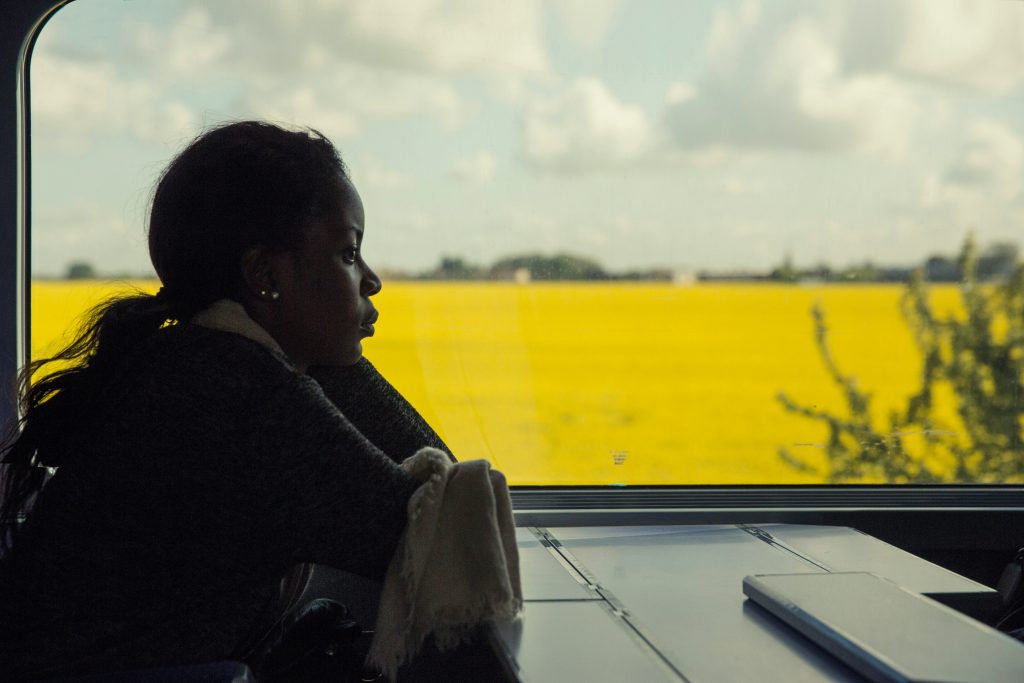
Being Kind

Photo by Barrett Baker on unsplash.com

The 29th word in my Lent lexicon is

KINDNESS.

Kindness is a small word. It carries no great intellectual, theological or spiritual weight. While we might admit the value of kindness many of us would not even think of it as part of a spiritual practice. It doesn’t speak of grand plans, actions or gestures. This can mean means that it’s easily overlooked.

It often relates to small things that we do for one another during the day that we don’t always even notice. Today’s responsorial psalm (144/145), provided the perfect opportunity to reflect this often overlooked practice. The psalmist writes:

“The Lord is kind and full of compassion.”

Often it’s something we recommend to little children, but don’t really think about allowing it consciously to shape our own practices or interactions. I can’t help feeling that this attitude means we miss out on a really valuable practice.

It seems to me that it’s the “smallness” of kindness that makes it possible for us to act on it. To be kind require a lot of energy or a huge amount of resources. It doesn’t mean we have to have answers or solve problems.

Kindness asks one very simple, straightforward thing from us… that we put others before ourselves. To be kind all we have to do is ask ourselves what would make another person feel more comfortable, more loved, more welcome in any given situation.

Yet, those small, seemingly insignificant actions can change lives and lighten burdens in ways we could never imagine.

Where is Christ inviting you to be kind this Lent?

Categories
Benedictine Spirituality Christ Gospel Lectio Divina Lent Scripture

People of hope.

The 27 word in my Lent lexicon is:

HOPE.

Dr ina melny on unsplash.jpg

Hope is essential for life. Its opposite, hopelessness can quickly drain all our energy and make life seem very difficult.

It’s relatively easy to be hopeful when life is going well. When we feel secure in our personal lives and when our societies seem prosperous and stable. At those times hope seems the obvious choice and doesn’t require much effort.

When life gets more challenging it’s much harder to be hopeful. When we see suffering, misunderstanding and even cruelty in every direction hope can begin to feel impossible and pointless. The same applies when we’re offered false hope, promises that we know in our hearts won’t stand the test of time and become reality. In his letter to the Romans St Paul gives us a reason to hope that will stand up whatever we face:

“Hope does not disappoint, since the love of God has been poured into our hearts by the Holy Spirit.”

Writing in his own challenging times St Paul could see that the real source of hope is the love of God holding us in being however challenging our times are.

Today’s gospel takes up this message. Desperate as the court official is at his sons’ illness he’s able to glean enough hope in the hard situation to ask for Jesus’ help and to believe it when Jesus tells him his son will live:

“The man believed what Jesus had said…”

In our own challenging times we too can rely on the hope that God offers us will sustain us and support us whatever we’re compelled to face.

Where is Christ offering you hope this Lent?

Categories
Benedictine Spirituality Christ Gospel Lectio Divina Lent Rule of St Benedict Scripture

The call of humility.

Image by Mike Lewinski on unsplash.com

The 25th word in my Lent lexicon is

HUMILITY.

It’s another word with deep Benedictine roots. St Benedict dedicates a whole chapter of the Rule to it. He describes humility the steps on a ladder. The sides of the ladder he describes as our body and soul. This is a hopeful and holistic view. St Benedict is aware that humility requires self-awareness and acceptance of our whole reality, physical, spiritual, emotional.

Already his approach goes some way to untangling the mixed messages we receive about humility that can make it more challenging than it really is. We often think of humility as admitting our failings, and this is definitely part of it. We never think about the other side of humility, acknowledging our gifts and talents.

Humility is not a call to put ourselves down, although it requires that we accept those openly. It’s a call to self-knowledge, which means admitting both our failings and our gifts.

The difference between the two men in today’s gospel is that one has an honest view of himself, while the other has chosen to believe the wholly positive image that he presents to the world. Both had a choice to make, as do we. Jesus points us in the direction of the best path to choose:

“Those who exalt themselves will be humbled, but those who humble themselves will be exalted.”

Humility is a challenge both because we have to walk away from our false self and because we have to openly accept that our true self is a mixed bag of faults and talents.

Where are you learning humility this Lent?

Categories
Benedictine Spirituality Christ Gospel Lectio Divina Lent Rule of St Benedict Scripture

Conversion of life.

The 24th word in my Lent lexicon is

CONVERSION.

This is a particularly good word for a Benedictine to reflect on during Lent as conversion of life is one of our vows, and it’s always worth revisiting those from time to time. It’s a call always to be turning back to God, always to be open to the working of God in our lives.

It’s a call always to be open to the new life God offers us, even if choosing life sometimes doesn’t feel very life-giving. Conversion of life calls us to be prepared to change our ways, to try again.

In the first reading Isaiah presents conversion as a returning to God’s presence:

“Come back to the Lord your God…”

He invites us to acknowledge how far we have wandered from God and how we need to come back into God’s presence to be healed and restored. He promises us that if we find the courage and humility to do this we will be met with love as God says:

“I will heal their disloyalty; I will love them with all my heart…”

This brings us to the heart of the call to conversion. As Jesus points out in the gospel it is all about love:

“You must love the Lord your God with all your heart, with all your soul, with all your mind and with all your strength. The second is this: You must love your neighbour as yourself. There is no commandment greater than these.”

The call to conversion is a call to allow ourselves to be healed and loved by God, and to bring that healing love into our relationships with one another. Then, knowing ourselves to be loved we are able to reach out and love others.

Where is God calling you to conversion of heart this Lent?

Categories
Benedictine Spirituality Christ Gospel Lectio Divina Lent Scripture

Pay attention.

Photo by Jakub Żerdzicki on unsplash.com

The 23 word in my Lent lexicon is:

ATTENTIVE.

Today’s gospel shows some of the controversy that surrounded Jesus’ ministry. Having cast out a devil he is accused of doing so through the power of Satan. He takes his accusers to task, challenging them to reflect on their attitudes and to pay attention to what is going on around them.

It’s a wake-up call, a call to pay attention. He says to them:

“If it is through the finger of God that I cast out devils, then know that the kingdom of God has overtaken you.”

They don’t expect to find the kingdom of God in this wandering rabbi. His words call them to look beyond their prejudices, to allow for the possibility that the kingdom might appear in surprising and unexpected ways.

His words speak powerfully to us too. We also have our prejudices and expectations. Like the people in the gospel we think we know where it’s possible to encounter God. Jesus reminds us that the kingdom will always be a surprise.

It will always become apparent in unexpected places and unexpected ways. So, we need to be constantly alert. We need to be attentive, with eyes and hearts open to the possibility of encountering God in every situation and in every encounter.

When life is hard we are tempted to do the exact opposite of this. We are inclined to narrow our views and to close down rather than to risk opening up to new possibilities.

Jesus’ call is to work against this tendency. His call is to keep being open, alert and attentive so that, even in these most challenging times we will be able to recognise the kingdom unfolding in our midst.

Where are you being called to be attentive to the presence of the kingdom in your life this Lent?

Categories
Benedictine Spirituality Gospel Lectio Divina Lent

Encounter with the living God.

Photo by Johnny Cohen on unsplash.com

The 21 word in my Lent lexicon is

ENCOUNTER.

The Lent scriptures are full of significant encounters with God. Moses, the blind beggar, the Samaritan woman and the disciples all have life changing encounters with God that we hear about in Lent.

None of those are as significant as the encounter at the heart of today’s feast, the Annunciation. Mary’s encounter with the angel Gabriel is life changing, not just for her, but for all of creation. St Benedict of Clairvaux captures its significance in one of his sermons, writing of all of creation waiting with bated breath for Mary’s answer:

“The angel is waiting for your answer, it is time for him to return to the God who sent him. We too are waiting, O Lady…If you consent straightaway shall we be saved…by one little word of yours in answer shall we all be made alive.

Her response propels her, us and all of creation into a new reality:

“I am the handmaid of the Lord…let what you have said be done to me.”

It’s often portrayed as a moment of calm and serenity, sometimes the depictions also hint at confusion and disruption. I suspect that the reality encapsulated all of those. It’s important to be aware of this when we come to reflect on our own life changing encounters with God. We hope and expect these to be moments of communion that are calm and serene.

We recognise times when we’re as certain of God’s presence as the disciples at the transfiguration. Yet our encounters with God can also be confusing, disruptive and disconcerting. It seems to me that if our own encounters with God are to be truly life changing they have to have disturb our lives as well as offering consolation.

How is God challenging you to allow God’s presence to disrupt your life this Lent?

Categories
Benedictine Spirituality Christ Gospel Lectio Divina Lent Scripture

Second chances.

Photo by Michal Hlaváč unsplash.com

The 19 word in my Lent lexicon is:

SECOND CHANCE.

We live in a world that is quick to judge and to dismiss those are viewed as not living up to our expectations. We live in a “cancel” culture that dismisses anyone who criticises or even disagrees with us. This makes life feel very pressured for all of us. We feel the pressure of always being right and are stressed by the constant effort of avoiding anything that looks remotely like failure.

In today’s gospel Jesus takes the opposite approach. In telling the crowd the parable of the fig tree he reminds us that God is a God of second chances. When the vineyard owner sees his fig tree isn’t bearing fruit his inclination is to cut it down and use the space for something else. His gardener stays his had saying:

“Leave it one more year and give me time to dig round it and manure it: it may bear fruit next year; if not, then you can cut it down.”

The gardener recognises a potential in the fig tree that the master misses. He sees that with extra care, attention and nourishment the tree might flourish and bear fruit, however unlikely it seems.

When we feel like we’re failing or that our lives are not bearing fruit Jesus looks at us in the same way as the gardener looks at the fig tree. He sees beyond the disappointment and hopelessness. He offers us a second chance, knowing that with care, attention and nourishment we too can bear fruit, even if we can’t quite believe it ourselves.

Where is Christ offering you a second chance this Lent?

Categories
Benedictine Spirituality Christ Gospel Lectio Divina Lent Scripture

Mercy

Photo by Dekler Ph on unsplash.com

The 18 word in my Lent Lexicon is:

MERCY.

It’s a word that’s full of hope and challenge. Its challenge is in it’s call to admit our faults & failing, to confess that we all need mercy in our lives. We both stand in need of God’s mercy and are called top be merciful towards others. To admit this is uncomfortable, especially in a world that seems to expect us to be effortlessly successful in every endeavour.

Another challenge of mercy is that it can only come as a gift, we can’t demand it, earn it or get it for ourselves. The most we can do is ask for it when we recognise our need strive to be open to receive it.

It’s not all challenge, mercy also offers us hope. In today’s first reading the prophet Micah writes:

“What god can compare with you: taking fault away, pardoning crime, not cherishing anger for ever but delighting in showing mercy?”

His words remind us, not only that God knows our faults and is willing to be merciful, but that the mercy is offered freely and generously with delight. The source of God’s mercy towards us is the love, the love that holds us in being. It’s the love that the gospel describes in the story of the prodigal son.

Knowing the son’s faults, and even that his predicament is of his own making, his father reaches out to draw him back into his love. However we disguise them God knows our faults, and knowing them delights in offering us mercy and welcoming us back into God’s loving embrace.

Where are you being offered God’s mercy this Lent?

Categories
Benedictine Spirituality Christ Gospel Lectio Divina Lent Liturgy Monastic Life Rule of St Benedict Saints

Listen with the ear of your heart.

Photo by Anastasiya Badun on unsplash.com

Today we’re celebrating the feast of the Passing of St Benedict, so for my Lent word I’ve gone back to the wisdom of his Rule. The 17 word in my Lent lexicon is:

LISTEN

Listen is the first word in the Rule of St Benedict. It takes me back to the basics of the Christian call. We’re getting close to the halfway mark in Lent. I always think of this as a bit of a “dead” time in Lent. The novelty of our Lent practices has worn off, and we’re still a long way from the impetus of Holy Week.

This means that it’s the time when it’s easiest to let our Lent practices slip. In such times I find it helpful to go back to the basics. St Benedict opens the Rule with these words:

“Listen carefully to the master’s instructions and attend to them with the ear of your heart.”

The call to listen is at the heart of the Rule and of the gospel. We can’t follow the call of the gospel unless we allow ourselves to hear it. For that to happen we need to create space. We live surrounded by 24 hour sound. This can be very distracting.

If we are to allow God the chance to speak to our hearts, we have to switch off some of the other sounds that surround us, even the good & helpful ones. We have to create a quiet space where we can hear the gentle, loving voice of God calling us to follow.

What is helping you to listen to God’s voice this Lent?

Categories
Benedictine Spirituality Christ Discernment Gospel Lectio Divina Scripture

Choosing to trust.

Photo by Raisa Milova on unsplash.com

The sixteenth word in my Lent lexicon is

TRUST.

Today’s readings focus on trust. They make it clear both that we are free to choose where we put our trust and that we are called to trust God.

Jeremiah lays out the consequences of both of both choices in the starkest terms possible. He is very clear if we want to live in peace to have to choose to trust God, any other choice will lead us to disaster.

The responsorial psalm assures us that the way to true peace and happiness is to trust God. The gospel contrasts the fate of the rich man who trusted his own resources with Lazarus who had no choice but to trust in the loving mercy of God.

All of them speak to a truth we know in the depths of our hearts, being relational beings it’s impossible to live without trust. This is an uncomfortable truth in a society that places a high value on independence, telling us that we can meet all our own needs without assistance or support. In such circumstances it can be challenging to accept Jeremiah’s words:

“A blessing on those who put their trust in the Lord…”

To trust we have to admit that we are needy, that we can’t meet all our needs ourselves. It can be an uncomfortable position to be in, especially in precarious times. Lent is a good time to reassess where we put our trust, to turn again to trusting God’s ways and God’s plans rather than our own.

Where is God calling you to trust this Lent?