Categories
Benedictine Spirituality Christ Cross Discernment Gospel Lectio Divina Lent Liturgy Prophetic voices Scripture

Living fearlessly

Photo by Luke Moss on unsplash.com

I’ve been slow to write a reflection today. That’s partly a reaction to the world situation. We woke up this morning to a world even more immersed chaos that was yesterday. It made my plan to spend the second week of Lent focusing on the blessing of gospel living seem at best irrelevant. As I watch conflict and chaos spread across the world it’s almost impossible to discover any blessing in life.

This is the natural response in such frightening and unsettled times. We tend to turn in on ourselves, seeking protection and turning away from hope. In such situations it quickly becomes hard to notice the blessing that God continues to lavish on us even in the hardest of times.

In that state of mind this line in our Lauds Canticle from the prophet Isaiah leapt out at me:

“Do not be afraid, for I have redeemed you; I have called you by your name you are mine. Should you pass through the sea I will be with you; or through rivers, they will not swallow you up.”

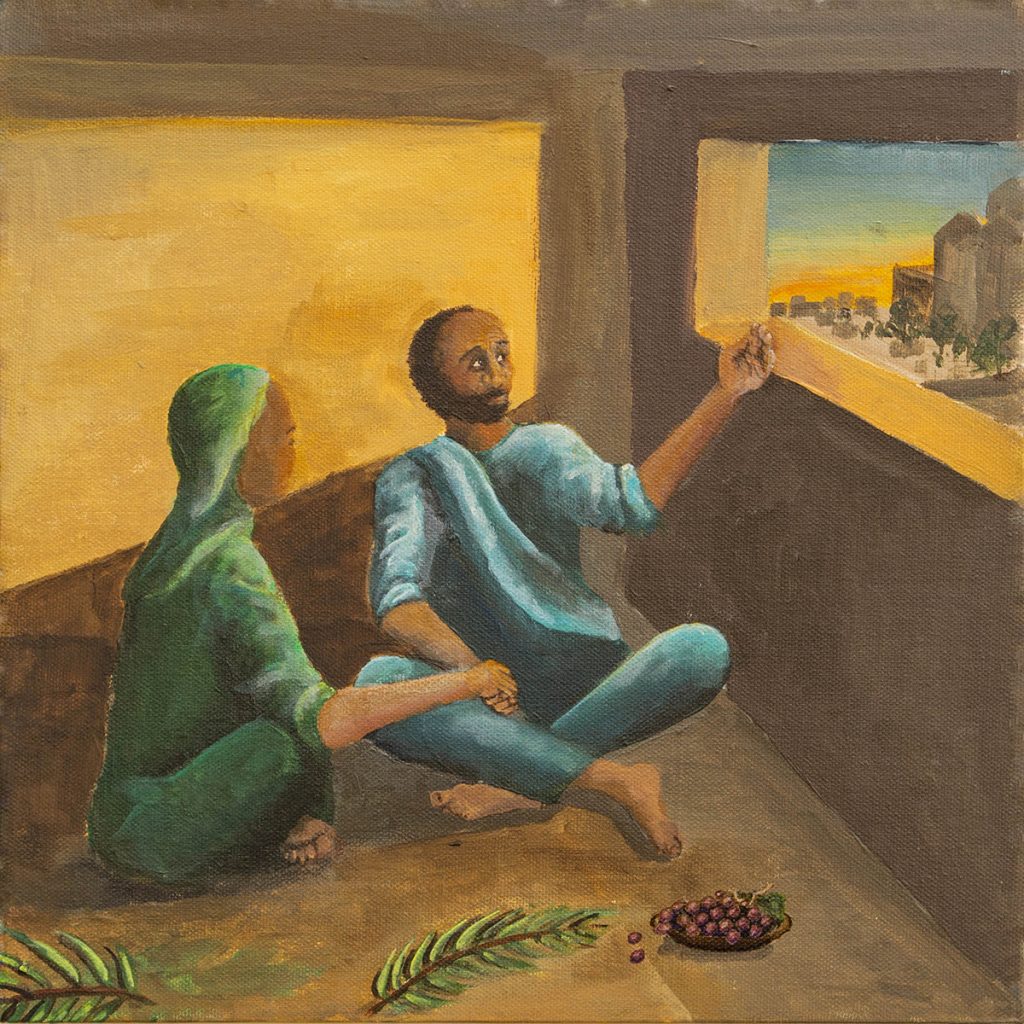
This wasn’t written to people living safe and stable lives. It was written to a people in exile who had lost their families, their livelihoods, their culture, even their faith.

This caused me to think again about gospel living. If Isaiah’s words could be a blessing for people in exile they can be a blessing for us in our challenging circumstances today. The blessing of living for today is that however dark and frightening our times, however overwhelming our circumstances we are held in the heart of the loving God who will never leave us.

As we begin the second week of Lent do you need to feel that you are held in God’s heart?

Categories
Benedictine Spirituality Christ Cross Gospel Lectio Divina Lent Prayer Scripture Uncategorized

Learning to ask

Photo by Roan Lavery on unsplash.com

As I’ve reflected this week on the blessing of BEGINNING. I’ve been struck by the sheer variety of reasons there are for making beginnings. Some are forced on us by circumstances beyond our control.

Others are made freely and willingly because we feel the need for change. Whether our beginnings are caused by necessity or inspired by dreams and desires they often seem to grow from an awareness of neediness. With this in mind I turned to today’s gospel and was struck by this:

“Jesus said to his disciples: ‘Ask, and it will be given to you, search and you will find, knock and the door will be opened to you.’”

It’s one of the most hopeful, and challenging verses of Scripture. The hope lies in the promise of needs met and an openhearted welcome. The challenge is to admit our neediness, to confess that we have needs and desires that we are incapable of fulfilling by ourselves. That can be a hard thing to do in our society that expects us to be high achievers in every area of life.

The gospel offers an alternative view. Instead of seeing neediness as a failure today’s gospel offers us the opportunity to see it as a new beginning, an invitation to openness and honesty.

Today’s gospel offers us is the opportunity to come into the presence of Christ with all our failings, uncertainties and incompleteness. It promises us that in accepting the blessing this new beginning offers we will find ourselves welcomed into the loving heart of Christ.

What do you most need to receive from the loving heart of Christ this Lent?

Categories
Benedictine Spirituality Christ Cross Discernment Divine Office Lectio Divina Lent Rule of St Benedict Saints Scripture

A habit of listening

Photo by Anastasiya Badun on unsplash.com

Nothing speaks to the hard work of BEGINNING as much as developing a new habit. In today’s first reading Jonah, a reluctant prophet is challenged to develop a new habit of obedience. God calls to him:

“Up!…Go to Ninevah, the great city and preach to them as I told you to”

Perhaps having learned from his earlier disagreement with God Jonah obeys swiftly and without argument or prevarication:

“Jonah set out and went to Ninevah in obedience to the word of the Lord.”

His response can make obedience seem easy, straightforward and simple, but it’s more complex than that. It takes me back to the Rule of St Benedict which calls us to “unhesitating obedience”. This is not a call to simply do what we are told, though it sometimes requires that.

Rather the call to obedience is a call to listen and respond to the call of God. It requires discernment, both to hear the call and discover the response we need to make. In the first instance the call to obedience is a call to listen. Then it is a call to respond to what we hear.

We’re called to develop a habit of listening, to attune ourselves to God’s presence in every situation so that we learn to recognise God’s voice in our lives. From this listening we will be able to discern the response we’re called to make. It’s a process that requires practice. We will make mistakes, getting it wrong, trusting in God’s mercy, and being willing to try again and change direction if necessary.


Where are you being called to begin to develop a habit of listening this Lent?

Categories
Benedictine Spirituality Christ Cross Discernment Divine Office Gospel Lectio Divina Lent Liturgy Rule of St Benedict Scripture Uncategorized

A second chance

Photo by Thomas Scheiner on unsplash.com

In today’s gospel his disciples asked Jesus to teach them to pray. The words he taught them have become one of the best-known, most used, and most loved prayers in Christianity. We know it so well, saying it several times a day, sometime without a great deal of attention. As I reflected on it to date seemed to me a perfect vehicle for reflecting on the blessing of BEGINNING:

“Give us today our daily bread. And forgive us our debts, as we have forgiven those who are in debt to us. And do not put us to the test, but save us from the evil one.”

There is a beginning in the call of today’s gospel to rediscover its many riches from its ordering of the universe to its trust in God’s mercy and love for us. Each day when we pray it offers us the chance to begin again by putting ourselves firmly in that loving and merciful presence. In his rules and Benedict says:

“The celebration of Lauds and Vespers must never pass without the superiors reciting the entire Lord’s prayer at the end for all to hear, because storms of contention are likely to spring up.”

His words remind me of how this prayer is constantly offering us the opportunity to begin again. It acknowledges that we will fail again and again, but it doesn’t give up on us. Instead, it reminds us of the loving mercy of God which is always offering us a new beginning.

The beginning it offers allows us the opportunity to reset our relationship with God and with one another. It doesn’t deny our failures to love God or each other. Instead it offers us, again and again, a second chance, an opportunity to do better next time.

Where is Christ offering you an opportunity to begin again this Lent?

Categories
Benedictine Spirituality Christ Cross Discernment Divine Office Gospel Lectio Divina Lent Scripture Uncategorized

Loving service

Photo by Hc Digital unsplash.com

Today’s gospel is a very direct reminder that our faith is to bear fruit in our lives. Jesus illustrates this by telling his disciples a story of how his kingdom will be. It’s an uncomfortable read, full of challenge.

It reminds us that having decided to follow Christ, and committed ourselves to his kingdom every aspect of our lives has to change. We have to change the way we see the world.

We are to discover Christ in everything, in creation, in our work and home lives, in the people we love, and perhaps most especially in the people we find challenging or difficult.

Jesus is very clear, when we encounter people in any sort of need, we encounter him. We are to treat them as we would treat Christ. This clearly surprised his first listeners, so much that he had to make it very explicit:

“I tell you solemnly, in so far as you did this to one of the least of these sisters and brothers of mine, you did it to me.”

We are so used to hearing this that it doesn’t have much of an impact on us. We know it from the Gospels, we hear it echoed in the Rule of St Benedict. We often acknowledge the sentiment without pausing to examine how our behaviour matches it.

Lent is a good time to revisit our behaviour. There is the possibility of a new beginning here. We can choose to look for ways to help and support those in need, to ensure that they are treated with dignity and respect.

Where is Christ inviting you to begin to look for ways to support those around you this Lent?

Categories
Benedictine Spirituality Christ Cross Discernment Divine Office Gospel Lectio Divina Rule of St Benedict Scripture

A hard beginning.

Photo by Juli Kosolapova on unsplash.com

Inspired by Sister Laurentia John’s book: “The Way of Benedict: Eight Blessings for Lent.” I’ll be reflecting on a different blessing each week in Lent through the lens of the Scripture readings and of the Rule of St Benedict.

The first blessing is BEGINNING. Chaim Potok’s book “In the beginning”, opens with this phrase, “all beginnings are hard…” This is something I often choose to forget. I prefer to focus on the promise, hope and possibility that a new beginning offers us.

However much our beginnings overflow with possibility, and they are also hard. Beginnings don’t come with guarantees. Each beginning requires us to step out in trust into the unknown, that is challenging and unsettling.

This is highlighted by today’s gospel. We see Jesus stepping out into a new beginning. Immediately after his baptism when he is acknowledged by God as “beloved son” we’re told:

“Jesus was led by the Spirit out into the wilderness to be tempted by the devil.”

It’s hard to imagine a harder beginning than that. Part of me wants to shy away from it, to look for a gentler start to this journey that we are called to imitate.

Yet Jesus doesn’t shy away from this hard beginning. He faces the challenge of each temptation head-on. His courage and perseverance lead him through the temptations until we hear:

“Then the devil left him, and angels appeared and looked after him.”

His example offers us hope. Whatever hard beginnings our own Lent brings, we can trust that we too will find blessings to sustain us on that journey.

What blessing do you most need to begin your journey this Lent?

Categories
Benedictine Spirituality Christ Cross Discernment Divine Office Lent Liturgy Scripture Uncategorized

Sacred space

The encounter between God and Moses at the burning bush is one of my favourites, it sets the tone for the whole of Lent. There are certain places that we think of as “holy”. There are places we go to deliberately to seek God.

It might be a church or a prayer room, or a corner of our house that we use as a prayer space. There can also be places outside where we feel it is easier to connect with God. We sometimes call these “thin places”, they are often places of great natural beauty.

Moses is in the midst of a very ordinary activity on an ordinary day. He’s not in any place that’s officially marked as holy or religious or anywhere particularly beautiful.

It’s in the ordinary that God reaches out to Moses, using his curiosity about the “strange sight” of the burning bush to draw him into a conversation. As soon as Moses draws close God call out to him:

“Take off your shoes…for the place on which you stand is holy ground.”

Lent gives us the opportunity to reflect on what that means in today’s fragmented world. God offers Moses a promise and a challenge. The promise is that God will be with him whatever he faces.

God also challenge him to go out of his comfort zone in ways he could never have imagined. We also receive that promise and are challenged to move beyond the boundaries where we feel safe and comfortable.

Where are you being invited to discover the promise & challenge of holy ground in your life this Lent?

Categories
Benedictine Spirituality Christ Cross Divine Office Lectio Divina Lent Liturgy Prophetic voices Rule of St Benedict Scripture Uncategorized

Practicing Love

Photo by Clem Onojeghuo on unsplash.com

We always start Lent full of hopes and plans. We plan our Lent practices with care, giving serious thought to what we will do or give up. We do this with the best intentions, looking for what will draw us closer to God in this special time.

We have high hopes for what these practices will accomplish in our spiritual lives. These practices give us a sense of purpose and focus that we desperately need in the midst of life’s that can be very distracting and dissipating.

Yet for all their value it can sometimes feel that these practices can become distractions themselves. We can become more focused on completing the practices than on their ultimate purpose. Today’s 1st reading is a call to look beyond the outward signs of our Lent practices to their ultimate purpose.

The prophet Isaiah writes:

“Is not this the sort of fast that pleases me – it is the Lord who speaks – to break unjust fetters and undo the thongs of the yoke, to clothe the those you see to be naked and not turn from your own kin? Then will your light shine like the dawn and your wound be quickly healed over.”

His words remind us that our Lent practices are not only for our own personal benefit. This is especially true in these challenging and hard times. They are to change our hearts so much that they also alter our behaviour. Whatever they are they should lead us to reach out to those in need.

They should soften our hearts so that we feel our neighbours’ pain. They should lead us to be kinder, more compassionate, encouraging and supportive. They should lead us to lighten the burdens of those we encounter in whatever way we can.

How are your Lent practices enabling you to help those around you?

Categories
Benedictine Spirituality Christ Cross Discernment Divine Office Lectio Divina Lent Liturgy Prophetic voices Scripture Uncategorized

Making a choice

Photo by Malcolm Lightbody on unsplash.com

Lent is a call to refocus our attention on the really important things in life. It acknowledges that the stresses and strains we face every day can draws away from our true purpose. We can get so caught up in these that we forget the truly important things, and turned towards things that are not good for us. In today’s first reading God calls Moses to give the people a choice that will call them back to their true purpose:

“I set before you life or death, blessing or curse. Choose life, then, so that you and your descendants may live in the love of the Lord your God, obeying his voice, clinging to him; for in this your life consists…”

His words are just as relevant for us, especially in Lent. All our Lent practices aim to bring us back to what is truly life giving. They remind us that the only truly life-giving choice is to turn to God, the source of all life so that we can live in God’s presence and shape our life by God’s love. The gift of life however does not come automatically.

As Moses points out we have to actively choose what is life-giving. On the surface that seems easy, but it is not always that straightforward. Often, at the outset at least the life denying choice appears easier or more comfortable, while the life-giving choice can feel harder and more challenging.

Our Lent practices help us discern what is truly life giving. They can help us decide what we have to let go of so that the things that are truly life giving can find the space to flourish and grow.

How are your Lent practices helping you to choose life?

Categories
Benedictine Spirituality Christ Divine Office Lectio Divina Lent Liturgy Prayer Prophetic voices Scripture Uncategorized

Ash Wednesday – Turning back to God

Photo by Roman Kraft unsplash.com

Ash Wednesday always feels like a wake up call. It reminds us of how far we have slipped in our intention to live as people of God, how far we have moved from the values of the Kingdom that we’re called to make a reality. Watching all that is going on in our world today, that wake-up call seems even more urgent than usual. It makes the words of the Prophet Joel that we heard at Mass seem particularly relevant.

“Now, now – it is the Lord who speaks – come back to me with all your heart, fasting, weeping, mourning. Let your hearts be broken, not your garments torn, turn to the Lord your God again, for God is all tenderness and compassion…”

His words seem to sum up both what we are going through and what we need to do to about it. Our world once again seems full of suffering. Everywhere we look we discover the heartbreak that is always part of war.

The suffering already seems endless and insurmountable. We can very quickly begin to feel hopeless, numbed by the pain and unable to act.

In these circumstances it seems to me that our first and most important step is to turn back to God with our broken hearts and broken lives, seeking compassion and forgiveness for ourselves and for one another.

Maybe then, knowing ourselves ourselves the recipients of God’s healing compassion we will be able to find ways of sharing that compassionate love with all who are broken hearted today.

As we start our journey through Lent what heartbreak are you being called to bring into the compassionate love of God?